
By Emily Engst
Whether anyone foresaw that a handful of Zaydi study circles in the rugged, steep mountains of Saada, the Believing Youth (الشباب المؤمن, al-Shabab al-Mu’min) of the early 1990s, would one day send one of the world’s richest kingdoms knocking on doors from Washington to Islamabad for protection matters little now, if at all. Not least because the movement policymakers once saddled with a marginal role in Iran’s regional alliance, the Houthis, now acts on its own calculations, striking Saudi airports and oil sites hard enough to test the limits of the kingdom’s resilience.
Promising a unified Yemen free of foreign tutelage, and accused by their rivals of seeking to restore the Zaydi imamate overthrown in 1962, the Houthis are a product of the north. The movement, which calls itself Ansar Allah, the “supporters of God”, took up arms in 2004 over local grievances, fought six rounds of war against President Ali Abdullah Saleh’s government, seized Sanaa in 2014 and has withstood a Saudi-led coalition since 2015. Abdul-Malik al-Houthi, brother of the founder Hussein al-Houthi, now controls Sanaa and much of Yemen’s populous north and west, where rallies still close with al-sarkha, the “rallying cry” against America and Israel.
But why Saudi Arabia, after four years of uneasy détente?
With Washington and Israel at war with Tehran since February, the logic of the “Axis of Resistance” would have perhaps pointed the Houthi arsenal towards American warships or the Israeli port of Eilat; it is Riyadh, instead, that has absorbed the bulk of their fire since July. After Yemen’s Saudi-backed government claimed it had struck Sanaa airport on 13 July to stop an Iranian aircraft touching down, the Houthis blamed Riyadh, and within a week imposed a maritime embargo on the kingdom under what Abdul-Malik al-Houthi called a “siege-for-siege” equation.
In the Houthis’ reading, it is Riyadh that bears responsibility for restrictions on Sanaa’s airport and Hodeidah’s port, and Riyadh that was expected to help finance the salaries envisaged under a UN-backed roadmap outlined in 2023 but never implemented. And with traffic through Hormuz severely disrupted and Washington absorbed by its war with Iran, the kingdom had rarely been more exposed. In other words, the war on Iran seemed to supply the occasion rather than the command, although Tehran is hardly absent: this summer, the Quds Force commander counted Bab al-Mandab among the alliance’s “winning cards”.
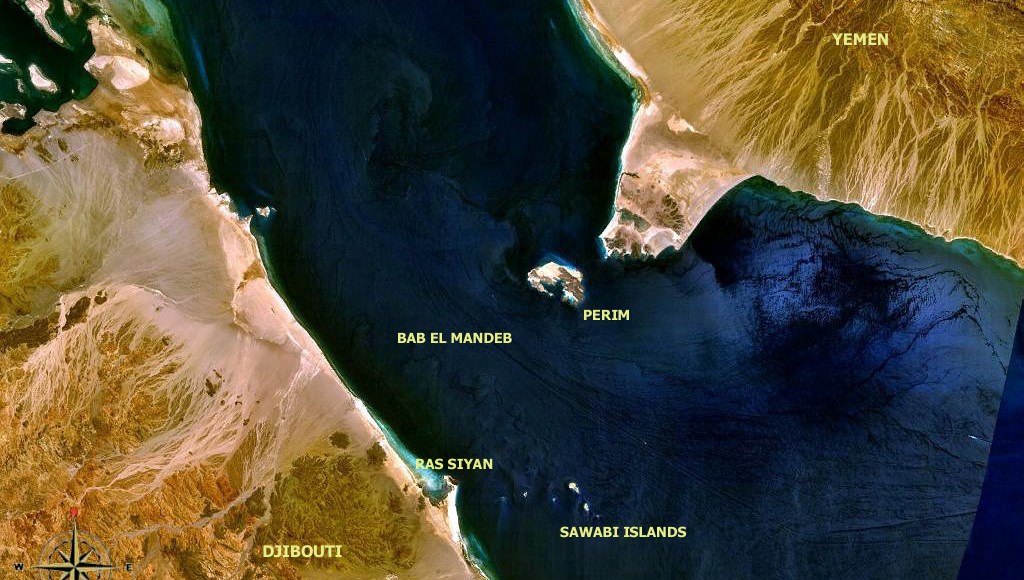
Two months later, in September 2026, Houthi fighters seized Mocha and reached Perim Island, at the mouth of Bab al-Mandab – a strait just 29 km wide at its narrowest point and a vital artery for global trade. Their advance continued inland, with Reuters reporting them within 80 km of Aden by 2 November. Yet the movement need not physically hold the strait to make crossing it costly, as Egypt knows: its foreign minister estimates the Suez Canal’s lost revenue at some $11 billion since Houthi attacks on shipping began in 2023.
When Saudi-backed forces counter-attacked along the coast in early October, the Houthis answered in Saudi cities. On 10 October a Houthi strike hit King Khalid International Airport in Riyadh, killing 13 people and forcing some 400 flight cancellations; nine days later the kingdom pushed its “Davos in the Desert” – the renowned annual gathering where Riyadh courts global investors – back to 2027. Although the kingdom has weathered more than a decade of intermittent war in Yemen with its appeal to investors largely intact, foreign investment reaching a record as recently as 2025, for a state whose economic strategy rests on being a safe place to visit and, not least, to invest in, missiles hitting its capital’s main airport still appear hard to square with the image it has so carefully cultivated.
And who will come to Riyadh’s aid?
If the Houthis wagered that Washington would not rush to Riyadh’s defence, the bet has so far paid off. When the crown prince requested air strikes in September, Donald Trump declined direct intervention, offering intelligence and targeting assistance instead. Riyadh has since broadened its security net: British jets are now flying defensive patrols over the kingdom, and a defence pact has drawn Turkey and Pakistan closer to its side, while on 26 October its defence minister met Iranian officials, including the president, in Tehran. Rather than mark a sudden break with Washington, this looks like a kingdom quietly spreading its bets across several capitals, a habit of hedging that predates the current crisis but which the Houthi offensive has made all the more urgent.
Whether American restraint endures remains, to date, an open question. Trump’s “we may” might reflect calculated ambiguity, tantamount to the “madman” posture some detect in his handling of Iran, though the Houthis, who struck Riyadh again within days, appear somewhat undeterred. Or it may reflect plain reluctance, with Washington’s blurry red line seemingly drawn around threats to non-Saudi shipping rather than attacks on Saudi cities themselves. The domestic arithmetic lends weight to the latter, with 69% of American adults judging the Iran war not worth its cost in an AP-NORC poll released in early October, a mood that Tuesday’s midterms seem to confirm and that may well hold Trump back from intervening.
Yet restraint may well prove a matter of timing rather than principle: Trump himself has tied any new strike on Iran to the electoral calendar, pledging none before the midterms. Should a fresh offensive follow the vote, Yemen may be drawn into the next phase of the conflict.
Cairo, hedging in turn, has offered to help protect the kingdom: its parliament has cleared the way for military support should Riyadh ask for it, while President Abdel Fattah el-Sisi has excluded any attack on Yemen. Meanwhile, those with least say in the outcome are the nearly 300,000 Yemenis displaced since August, uprooted in a country where, by UN estimates, half the population already needed aid before this latest round of fighting, and whose plight risks being overshadowed by the calculations of the capitals now weighing their next move.
Whether the midterms give Washington a freer hand, and whether the talks in Tehran open a path to de-escalation, remains uncertain; what is already clear is that a movement long treated as someone else’s proxy has forced the region’s capitals to reckon with it, and left Riyadh unsure how far any of its partners will go in its defence.


0 comments on “Siege for Siege: Why the Houthis Have Turned Their Fire on Riyadh”