
by Audrey Hubleur
What if innovation in education meant blending the past with the present? As at other universities in France and beyond, teaching methods at the Graduate Institute appear to have evolved. Aiming to foster students’ critical thinking, creativity, memory, and concentration, these “new” practices actually draw on a much more “traditional” repertoire.
The widespread use of digital tools and especially the advent of AI have accelerated changes in pedagogical approaches. Two professors of International History and Politics in the Institute, Cyrus Schayegh and Carolyn Biltoft, have observed this shift. While the arrival of AI did not revolutionised everything, it has made the move towards more traditional forms of teaching less dependent on digital tools more significant. For example, like many of his colleagues worldwide, Professor Cyrus Schayegh has placed greater emphasis on oral exams, which enable students to participate in conversations and develop the ability to express themselves within a set timeframe.
However, the method gaining the most attention is handwritten notetaking. RTS recently reported that French universities are rediscovering the benefits of handwriting and have begun banning computers in class. Although not compulsory, this approach is encouraged at universities in Switzerland. Both interviewed Professors urge students to close their laptops during lectures and discussions. The benefits are numerous, particularly when it comes to concentration and memory. Indeed, neuroscientific research shows that handwriting improves memory and is generally more effective than taking notes on a laptop (Pam. A Mueller, Daniel M Oppenheimer, 2018). As Professor Cyrus Schayegh also notes: “when we type, and especially those of us who type really fast, we can basically type whatever the professor says. It becomes sort of mechanistic. However, if you write by hand, you can’t, which means that you already need to decide what’s important and what’s not. That process is already a learning process.”
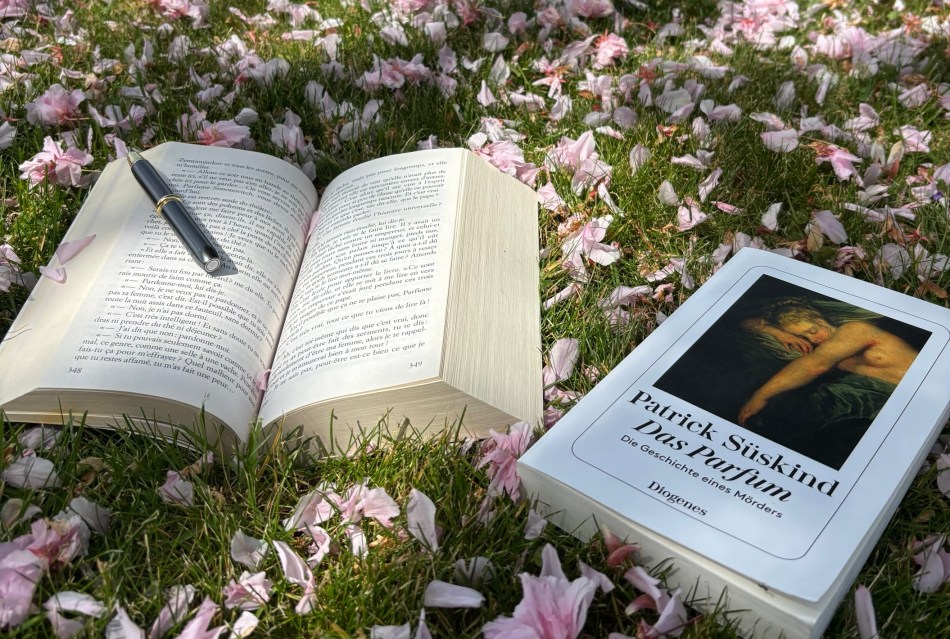
Beyond handwritten notetaking, writing by hand can also be understood as a way of returning to slower forms of learning, standing in contrast to the fast pace of technology. This might involve reading books or engaging with art. Professor Carolyn Biltoft suggests that the role of the educator today is above all to understand that the “mind is and can be cultivated as the intellectual equivalent of a ‘room of one’s own.’” Returning to such methods reflects the “importance of self-questioning, and the casting of doubt on any linear understanding of progress”. According to her, this personal space “is not a space of disconnect, or isolation or abdication of social or moral concerns”. It is much more “a place of freedom broadly conceived in order to reflect, consider and reconsider something like the bounds and textures of the human condition past and present.” The university can serve as a foundation for nurturing this intellectual space. It “means insisting that students read carefully, and indeed that might mean finding ways, as technology expands, to reclaim the cognitive and creative domains for the human.”
“Now more than ever in the age of AI, pure erudition, for its own sake, is also a form of activism.” — Carolyn Biltoft
At the Institute, the “Arts and Culture Initiative” aims to give more prominence to art, literature, cinema and music in academic research. Its objectives are “to provide and encourage a different perspective and to nourish a multidisciplinary reflection essential to the emergence of new solutions to the complex challenges of our world”. Moreover, it “aims to encourage a relationship with the world that engages emotions and human and social connection” for the students “who are also future decision-makers”. For the Institute, “this initiative offers a way of highlighting the urgent need to re-engage on a human level.” Gradually integrating art into research and continuously expanding one’s intellectual and artistic repertoire are both important qualities for meeting future challenges, since they allow a better understanding of human experience. As Professor Carolyn Biltoft argues: “literature and art remain an essential part of the historical record, ongoing: of humans worshiping, resisting, dreaming, making and unmaking, failing to succeed, refusing the criteria, manifesting continually as imperfect characters in an imperfect world.”
Regarding students, although a few seems reluctant to close their laptops during class, the majority express support for handwritten notetaking and writing by hand. Additionally, events like reading evenings at the Société de Lecture de Genève and similar initiatives are well-received.
Some students in France say they are uncomfortable with handwritten notetaking, mainly because it is slower. However, Professor Cyrus Schayegh believes this issue will likely resolve itself as primary education evolves. Our generation experienced the peak of the state’s fascination with computers as educational tools. Contrary to those who say that children today no longer know how to write, Professor Cyrus Schayegh suggests that the fever of computers “is sort of going down, which means that kids that are nine or ten, in ten or twenty more years when they will be at university, will be better again at writing by hand.”
The solution seems to lie in a hybrid educational model. It is probably impossible to turn back the clock and pretend AI does not exist. However, it remains possible to respond, resist, or avoid the risks associated with the misuse of technological tools. Both students and Professor Cyrus Schayegh agree that a workshop on the effective use of AI in academic work would be a valuable addition to the Institute. As both professors emphasise, what matters most is the cultivation of critical thinking, the capacity to inquire, ask questions, to foster creativity, and to build a free intellectual space of one’s own.


0 comments on ““Put aside the computer, write by hand”: the resurgence of traditional forms of learning in the Institute”