
by Nadir Gerber
Кириллча ёзиши ватаннинг тарихi бўlish қила оладими? Маданиятисhi? Тiл ÿзgartirilganса, халқ ham o’zgaradimi?
Can Cyrillic be a homeland’s history? Its culture? If the language has been changed, does the nation change too?
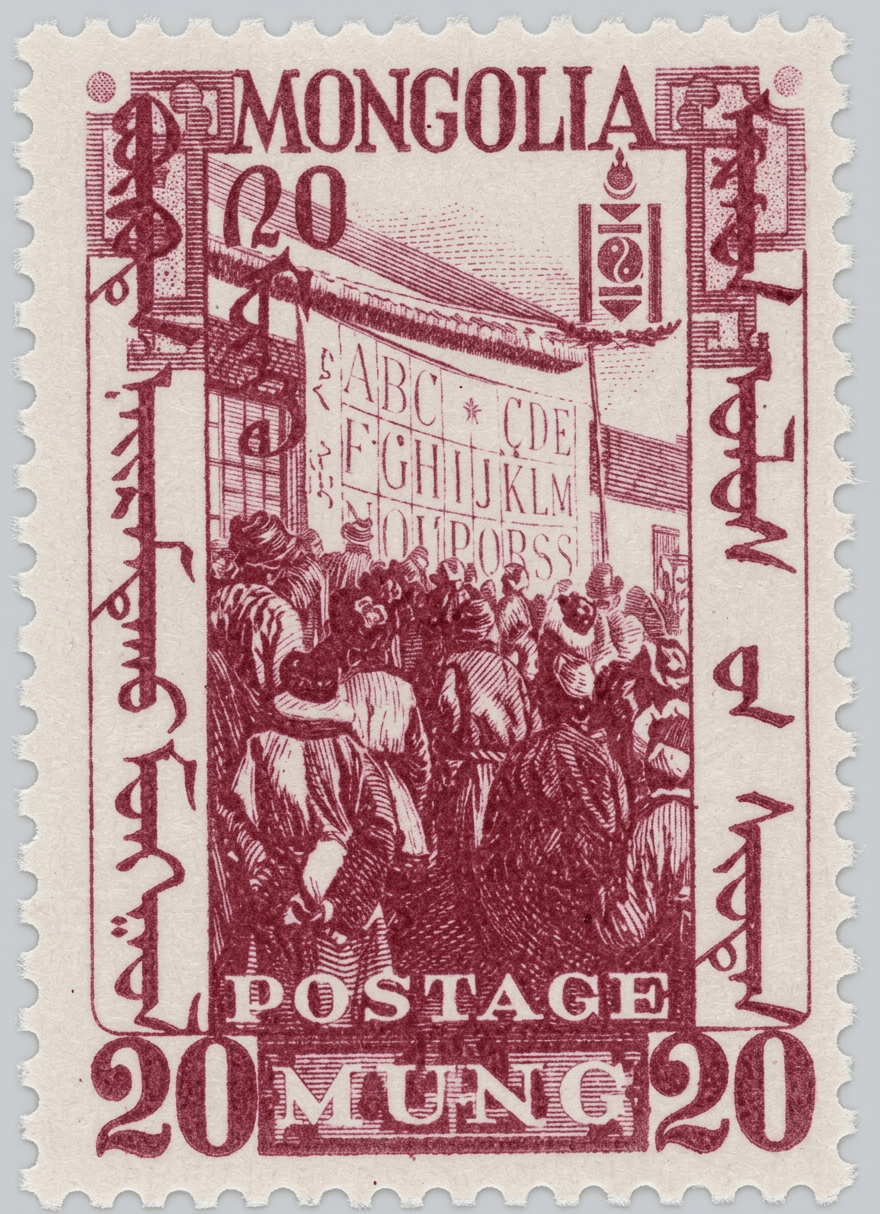
As of 2025, Mongolia mandated that all official documents be written in both Cyrillic and the traditional Mongolian script, bichig. According to the government, Cyrillic will be replaced entirely by bichig as the sole national alphabet come 2030. While acting with consideration for the nation’s historical and cultural circumstances, Mongolia’s decision to leave behind the Cyrillic alphabet reflects a broader trend of script substitution sweeping the formerly socialist states of Central Asia.
While Mongolian has historically been written in an adapted Uyghur script, modern state practice transitioned to Cyrillic following the 1921 Soviet intervention in the Mongolian civil war. While Cyrillic usage expanded across the ensuing two decades, the Mongolian People’s Republic (1924-1992) formalized the switch by decree in 1946. Concurrently, the Soviet Socialist Republics of Azerbaijan, Turkmenistan, Uzbekistan, Kazakhstan, Kyrgyzstan, and Tajikistan adopted forms of the Cyrillic alphabet as part of the USSR’s broader educational and nationalist reforms.
Following the Soviet Union’s collapse in 1991, the newly independent Azerbaijan and Turkmenistan were swift in discarding Cyrillic in favor of the Latin script. Uzbekistan has since undertaken the same initiative, having (perhaps preemptively) declared the project’s completion in 2023. Kazakhstan likewise expressed its intention to use the Latin script in the coming years.
Mongolia’s non-adoption of the Latin alphabet stands in line with yet notably apart from these parallel reforms. The severance of the pattern itself is evidence of the common underlying philosophy; language is a vector of power and positionality on the world stage.
The suspension of Cyrillic symbolically demonstrates a national process of de-Russification. In turning away from Russia, Central Asia’s adoption of the Latin alphabet has also signaled an interest in integrating with the West and, more precisely, the US.
In an address, the Kazakh president Nursultan Nazarbayev urged, “From 2025 we need to modernize our language to use Latin fonts and a Latin alphabet. For the sake of the future of our children we should make this decision and create it as a condition of entry for our wider global integration. This will enable our children to have a better understanding of the English language.”
Similarly, Mongolia has replaced Russian as the official primary foreign language, elevating English in its stead.
A certain gesture has also been made toward pan-Turkic unity, advanced most emphatically by Türkiye and institutionalized through the Organization of Turkic States (OTS). OTS has adopted a common Turkic alphabet, composed of thirty-four letters and modeled on the current Turkish writing system. While the governments of Azerbaijan, Turkmenistan, and Uzbekistan have all taken steps toward its adoption or expressed their intent to do so, these programs have since been abandoned, with each country developing its own system. As such, commentators regard the revised 2024 alphabet as meaningful only as a rhetorical gesture.
Mongolia, in its preference for bichig, is orienting itself not toward Russia or the US but China. Inner Mongolia, one of China’s autonomous regions, sits along Mongolia’s southern border. Unlike its northern counterpart, Inner Mongolia has continuously used the bichig script. When Mongolia was originally weighing whether to adopt the Latin alphabet, a non-negligible contingent of Chinese encouraged the language reforms to model themselves on the Inner Mongolian system, citing that this would not only strengthen ethnic unity but also reinforce the positionality of Mongolia as core part of Chinese dynastic history.
However, Chinese enthusiasm for this reform has been tempered in light of nationalist consolidation risking fealty to China. As an editorial for iMedia (Jinri Toutiao) warned, “This reform is expected to become a new opportunity for cultural exchanges between the two places [Mongolia and Inner Mongolia], enhancing the sense of identity and cohesion of national culture. At the same time, we must also be vigilant against the potential influence of extreme thoughts such as ‘Pan-Mongolism’ to ensure that cultural exchanges develop on a rational and healthy track.” These reservations accompany a new policy within Inner Mongolia which replaces the Mongolian language with Mandarin Chinese as the primary language of instruction in schools.
Negotiations of national orientation—whether to align with the US, Russia, China, Türkiye, or defer totally to a solitary autonomy—are more relevant than ever as Russia’s ongoing conflict in Ukraine and the toppling of the US as the global hegemon have left Central Asia bereft of the geopolitics to which they have been accustomed. In a small measure, these linguistic reforms are bets on how the world will be in the next decades. As it stands, the future of the region and that of the global order as a whole remains to be written.
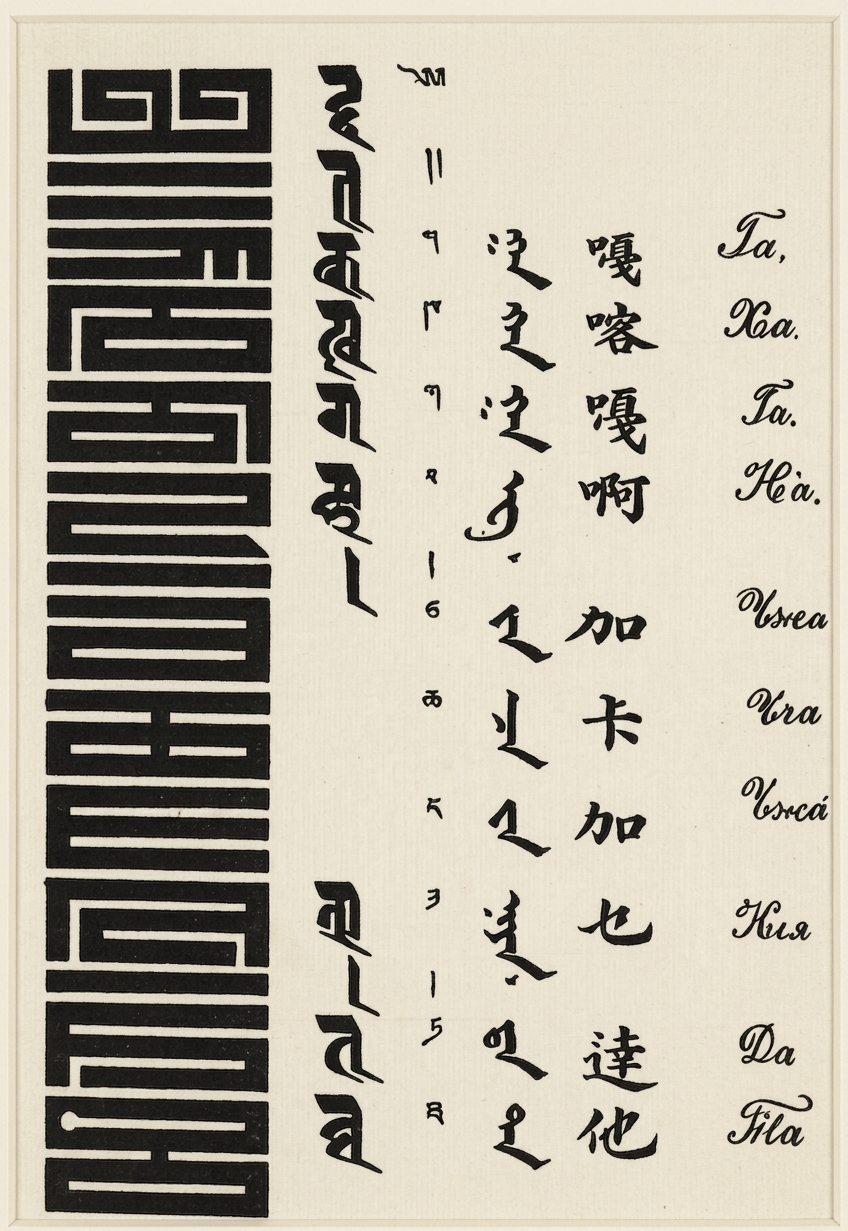


I once struggled with these specific letters during my initial learning phase. My background in phonetics made grasping the phonetic shifts quite difficult. It is a complex linguistic process.
LikeLike