
by Audrey Hubleur and Melisa Kisacik
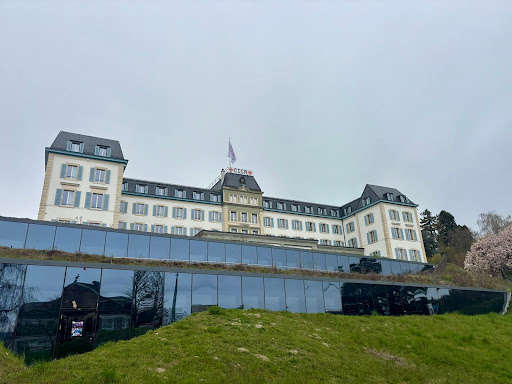
Last weekend, the heartbeat of humanitarian hope echoed through the halls of the ICRC Museum and across screens worldwide. The fourth annual Young Humanitarian Summit, organized by the Circle of Young Humanitarians, brought together young change makers from around the globe to reflect, challenge, and envision the future of humanitarianism.
In a world marked by rising conflicts, displacement, and crises that test the limits of international law, the summit asked a question both simple and profound: what does it mean to be humanitarian today?
The answer unfolded in conversations that were urgent, sometimes unsettling, but always grounded in the power of human connection. Eva Svoboda, Director of International Law at the ICRC, opened the summit with a stark portrait of the humanitarian landscape: armed conflicts have more than doubled since 2009, the number of displaced and missing persons has soared, and attacks on civilians and humanitarian infrastructure have become tragically common. Yet she emphasized a guiding principle that echoed throughout the summit: while laws may falter, humanity must remain unwavering.
“Humanity and impartiality must be our compass.” – Eva Svoboda
The panel explored these tensions with speakers covering topics such as law, peacebuilding, and military strategy. Interpeace CEO Itonde Kakoma, Brent Lemon who is a legal officer with the Canadian Armed Forces, and SRF journalist Susanne Biedenkopf guided discussions not just about problems, but also possibilities. Interventions by various actors during times of crisis have underscored the pivotal role of communities as first responders. Empathy and solidarity often serve as essential lifelines even before formal aid arrives and people are uniquely positioned to harness their energy, creativity, and technology to drive change.
Social media, Eva Svoboda explained in an interview she granted us, can be a double-edged sword in this effort. It brings distant crises into our living rooms, amplifies voices that might otherwise go unheard, and spreads awareness of humanitarian principles. However, it also spreads misinformation that can endanger aid workers and distort public understanding by propagating fake news. Navigating this balance, she said, requires vigilance, training, and a commitment to truth, which are qualities young humanitarians are poised to champion: “We have teams that work on countering misinformation,” she explained. “We train colleagues to recognize it, to understand who spreads it, and to respond effectively.”
Hope was in the room. Young participants leaned forward during Q&A sessions, questions brimming with curiosity. One hand rose, cutting through the weight of global crises: How can the younger generations change the world? The question lingered long after it was asked, a reminder that humanitarianism is not just a profession but a calling, and that young people are its pulse.
The Graduate Press asked Eva Svoboda whether she perceived a gap between the younger generation entering the field and the older one, and whether they had different perceptions and concerns. In response, she emphasized the importance of diversity: “We need different expertises, we need those colleagues who have done 25 years on the ground, we need people from different organizations, and we need colleagues who are much younger and come with a fresh view. That will make us better as an organization.”
This emphasis on working together, echoes what Eva Svoboda told us about how her humanitarian experience on the ground has shaped her career: “One thing that I always kept with me is how important it is to create trust with your colleagues. When working in a place where bombs are falling and it’s dangerous, you want to make sure that you create trust with your colleagues, that you reflect together on what we need to do, how we can protect ourselves, how we can do our work. This sense of community lives on until today.”
The Graduate Press left the event deeply enriched by the day’s discussions and exchanges. We would like to once again thank the Young Circle of Humanitarians for making this possible.
As the world becomes increasingly fragmented and armed conflicts multiply, there remains however a powerful source of hope: our shared humanity.
 The Graduate Press - La Gazette de la Paix
0 comments on “Humanity is the starting point of Humanitarianism: Young Humanitarian Summit 2026”