
By José Eduardo Martínez Torres
Across the Institute’s halls, I’ve heard many opinions: our environment is full of stressful energy, our Institute is an exclusive bubble not part of core Geneva, life in Geneva is not as vibrant as other cities in Europe, etc. I often hear it compared unfavorably to other cities in Switzerland. I’m skeptical about jumping to conclusions. When we let ourselves be guided by subjective perceptions of the city, we are predisposed to not let the city reveal itself. Although I acknowledge that Geneva is a city where not everyone may find their place, it still has interesting hidden stories waiting to be discovered.
It had been a while since I allowed myself to wander aimlessly through the city. I woke up on Friday without realizing that, in a few hours, one of those conferences I had heard about almost by chance would begin: a colloquium on the coup d’état suffered by the Argentine Republic at the hands of the military during the 1970s. The event was organized by Valeria Wagner, professor of philosophy at the University of Geneva, and Yanina Welp, a professor affiliated with the Albert Hirschman Centre on Democracy at the Institute. The event caught my attention because one of the participants would be a distinguished Latin American law scholar whose books explore the political development that shaped modern understandings of constitutions and human rights in the region.
I spent five years in law school, where I recall how one of his books spoke to me in moving prose, almost worthy of a political manifesto, about the political processes that culminated in the protection of elite interests across Latin American constitutions (“Los Fundamentos Legales de la Desigualdad”). I flourished as a law student, and it was primarily through his books that I developed my own understanding of legal practice within the context of young Latin American democracies. Roberto Gargarella is an inspiring lawyer and activist who was part of the legal team of Carlos Nino, a well-known legal philosopher who designed the legal strategy to challenge the validity of the law of self-amnesty given by the military dictatorship for crimes they committed between 1976 and 1982.
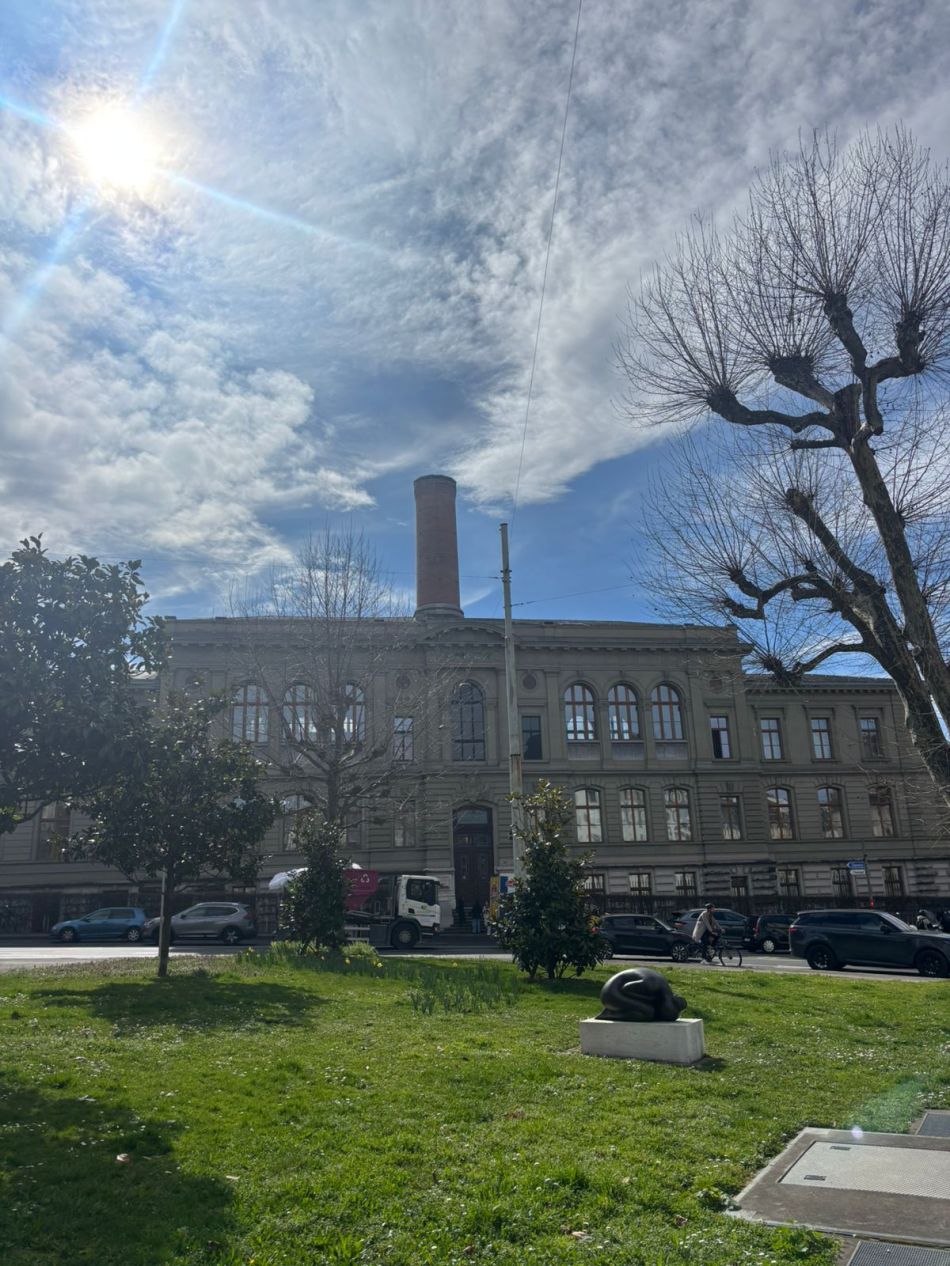
Friday, 13th March, was particularly beautiful and comforting: fresh air, a clear sky, and unusual calm for a weekday. I hopped on the bus and got off at the “Athénée” stop. As I walked toward the venue, I realized it would take place in a building that had caught my attention before because of the distinctive chimney rising above it: “Les Philosophies.” The building houses the Département des Lettres of our sister institution, the University of Geneva. Construction began in 1877 and it was inaugurated in 1879, originally housing the chemistry department. The building suffered a fire one night in June 2008, which damaged approximately 50,000 books from its literary collection; not due to the flames, but to the water used to extinguish them.
The Grand Amphithéatre was the selected venue for the conference. When the audience entered, the sound of the creaking wood was prominent, and the design of the seats was a pleasant surprise; a student from the Institute who took a class there during his bachelor’s degree, remarked “it feels as if you are attending a lecture by Einstein”. This room had another story to tell: that of Jeanne Hersch. According to Valeria Wagner, the room was named after her to honor her legacy as the first woman appointed as a professor in the faculty. A plaque with her name is visible on the podium where the main speaker delivers the lecture. Through her teaching and scholarship, she defended liberty, encouraged fight for justice, reflected on unfair conditions for women in daily life, and promoted human rights.
When choosing between Geneva and another city for my postgraduate studies, I remember a phrase a professor once told “In Geneva, the world comes to your door”. Geneva hosts cultural events where top-tier academics, politicians and activists come and debate on globally relevant topics, in stimulating, century-old venues that have an inspiring history behind. Many of us accept that we live in a bubble, on the international side of Geneva, which, for some reason, is not fully embraced by some of us as the core of the city’s identity, even though the canton presents itself in that way both externally and internally. And yet, even if we move within our small community, this should not limit our access to the hidden stories scattered throughout the neighborhoods of this remarkable city.
 The Graduate Press
I loved …😃
LikeLike
great article!
LikeLike