
Image attribution: Henry Wilkins/VOA, Public domain, via Wikimedia Commons
By Elena Natali
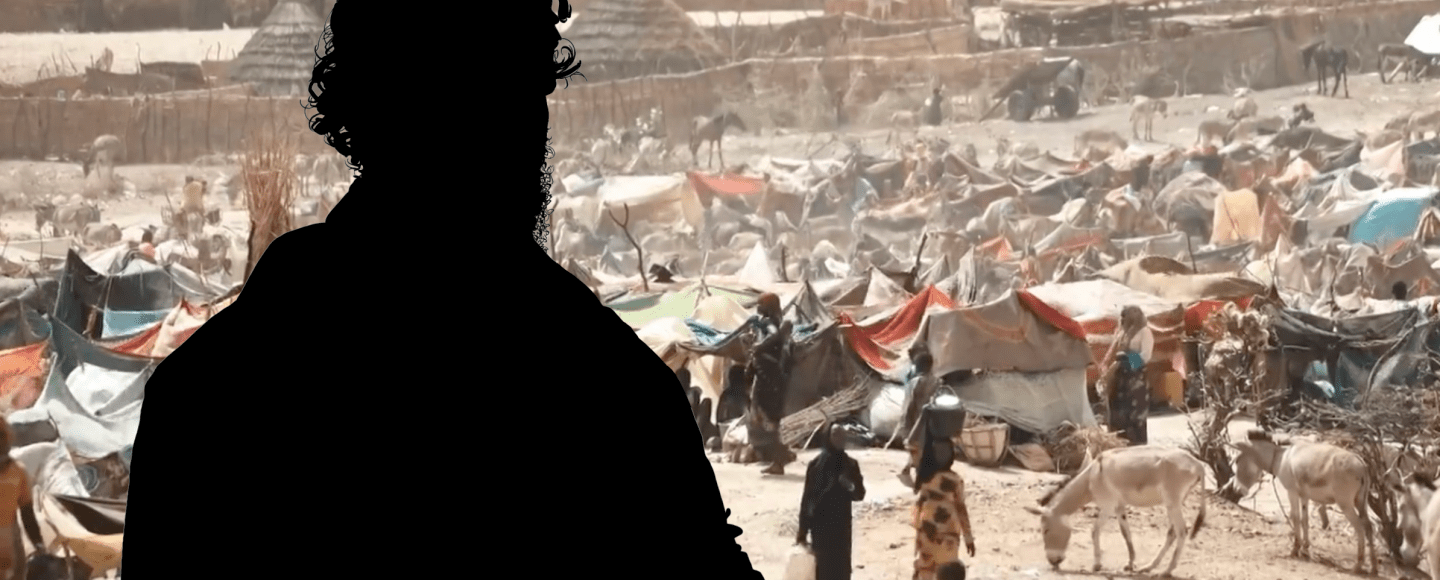
Salam, a MINT student at the Graduate Institute, before finding himself in Switzerland began his undergraduate studies in Syria, originally planning to continue them in Turkey. Yet, after the 2016 EU-Turkey deal with the EU, Turkey banned Syrians from traveling to Syria and returning to Turkey, forcing him to revise his plans. In 2017 he travelled to Khartoum to enroll in university in Sudan. Despite Sudan’s evident challenges, he quickly grew fond of the country and imagined building a future there, perhaps working for one of the local NGOs. But the sense of normalcy that surrounded daily life would prove alarmingly fragile.
When clashes between the Sudanese Armed Forces (SAF) and the Rapid Support Forces (RSF) erupted in 2023, that fragile normalcy vanished almost overnight. Telecommunications were cut, electricity grids collapsed, and the streets emptied. “Children stopped going to school,” he recalled, “And entire neighbourhoods fled with only what they could carry.”
In contest to others for whom movement defined those first days of the war, Salam himself could only remain in place – a routine administrative delay meant his Syrian passport was being held at the embassy for renewal. As the fighting intensified, embassies evacuated, staff disappeared, and his passport was effectively lost behind shuttered doors. With borders closing and flights halted, he found himself stranded without identity documents in a rapidly collapsing state. Salam and three friends arranged a risky evacuation from Khartoum, traveling east until they reached the Ethiopian border. Lacking the necessary documentation, he was stuck in limbo there for two weeks. With the help of his Brazilian wife, who coordinated with both the Brazilian embassy and the ICRC, an emergency travel document was issued, and a flight to São Paulo was arranged. “Without them,” he said quietly, “I would still be there, if I survived at all.”
Many of his friends remain stuck in Sudan even now, unable to leave because they lack documents or because the roads to safety are controlled by RSF. His escape was an exception to the norm.
Salam’s story is only a doorway into a much wider and more complex landscape, a window into the deeper roots of a tragedy that is still unfolding largely out of sight.
In 2003 Arab tribal militias in western Sudan, known locally as the Janjaweed, emerged. Initially supported and tolerated – if not encouraged – by the Sudanese state, they became notorious for village burnings and systematic attacks in Darfur. In 2014, the government formalised the Janjaweed under the title of the Rapid Support Forces, granting it institutional sanction. By 2017, the RSF controlled large swathes of territory, including one of Sudan’s wealthiest gold mines, enabling the group to build transnational financial networks.
Their leader, Mohamed Hamdan Dagalo – better known as Hemedti – capitalised on these resources, expanding his influence through regional alliances. He deployed fighters to Yemen on behalf of the Saudi-UAE coalition, receiving funding and equipment in return. These international ties transformed the RSF from an unstructured militia into a paramilitary force capable of challenging the Sudanese army (SAF) itself.
When the 2019 revolution toppled long-time dictator Omar al-Bashir, Hemedti sought to rebrand himself as a revolutionary hero. But as negotiations began over forming a transitional government and selecting civilian leadership, deep fractures emerged. The uneasy partnership between Hemedti’s Rapid Support Forces (RSF) and the Sudanese Armed Forces (SAF) masked profound ideological and political rifts: the RSF sought to preserve its autonomy and economic networks, while the SAF aimed to reassert centralized military control. In 2021, another coup shattered the fragile civilian-military arrangement, and by 2023, the two armed blocs were openly at war.
Ethnic mobilisation quickly became central to the conflict. The RSF drew heavily from Arab-Sahelian tribes, portraying itself as a defender of Sudan’s “marginalised peripheries.” The SAF, recruiting largely from central riverine communities, framed the RSF as “foreign infiltrators” from the Sahel. This polarisation turned a power dispute into an existential identity struggle, leading to mass atrocities, ethnic cleansing, and the targeted displacement of non-Arab populations in Darfur, Kordofan, and the Nuba Mountains.
Foreign actors, meanwhile, amplified the conflict. The UAE has been widely reported to support the RSF through supply chains across Libya and Chad, motivated not only by access to Sudan’s gold and agricultural land but also by a long-term strategic objective: securing its own independent passage to the Red Sea. By cultivating influence in western and central Sudan – and potentially gaining access to ports in the east – the UAE could challenge the traditional dominance of Egypt and Saudi Arabia over Red Sea maritime routes.
Ethiopia, recovering from an internal conflict of its own, has an interest in preserving a fragmented and weak Sudan which would be unable to contest Ethiopia’s claims in the al-Fashaga borderlands. Egypt, meanwhile, supports the SAF for reasons of existential security. Cairo fears that an RSF victory – backed by the UAE and indirectly favourable to Ethiopia – would weaken Egypt’s influence both over Sudan and the Nile resulting in a shifted regional axis of power, especially as Ethiopia advances its dominance through the South from the Grand Ethiopian Renaissance Dam.
The humanitarian consequences of this game are devastating. According to recent UN OCHA updates, fighting has escalated sharply in Kordofan, transforming what once was a peripheral region in the conflict into a central battleground and exposing people to an immediate risk of violence and forced displacement. Towns like Kadugli and Dilling are under siege-like conditions: food supplies are collapsing, healthcare systems have disappeared, and humanitarian access is either impossible or actively blocked. Homes have been burned, water sources contaminated, and communication networks deliberately cut. Tens of thousands of civilians have fled in recent weeks, many on foot, many never arriving at their destinations.
Despite the magnitude of Sudan’s collapse, the crisis remains invisible to much of the world. “People think the war started last year,” Salam said. “But it started decades ago. And if the world continues to look away, it will not end.” Whether the world chooses to look closely, and act meaningfully, may well determine how many more stories end like Salam’s, and how many simply end.
 The Graduate Press - La Gazette de la Paix

0 comments on “Sudan’s Unseen Collapse: Salam’s Story and the Forces Tearing a Nation Apart”