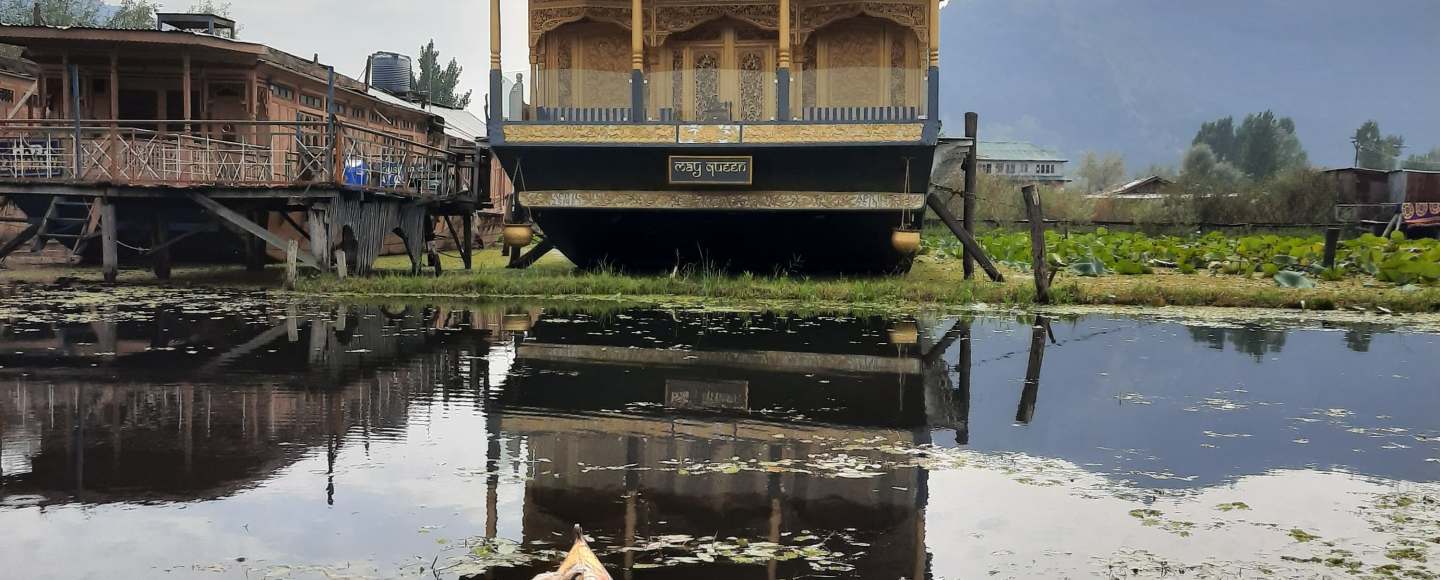

The world’s most densely militarised zone is nestled in the Upper Himalayas, with snow-capped peaks shadowing a razor-wired valley. It sits at the junction of giants, China to the northeast, India to the south, Pakistan to the west; administered in part by each, and claimed in full by the latter two. Paradise on Earth, a moniker of Kashmir, is most-commonly attributed to thirteenth century Indo-Persian poet Amīr Khusrau. Now, this epithet finds a common feature in mainstream Indian integrationist narratives of “normalcy”, carefully obscuring decades of violence.
Genesis of the Conflict
The conflict in and over Kashmir traces its roots to the turbulent partition of British India in 1947. As colonial rule ended, princely states like Jammu and Kashmir were given the option to join either India or Pakistan. The Hindu ruler of a Muslim-majority region, Maharaja Hari Singh, initially declared independence from either nation. Yet, after facing an armed grassroots rebellion at the western frontier, backed by Pakistani tribal forces, he beseechingly acceded to India in exchange for military assistance. This sparked the first India-Pakistan war and led to a UN-brokered ceasefire in 1948, which came with three core conditions: a temporary cease-fire line; complete and partial military withdrawal by Pakistan and India respectively; and a plebiscite on self-determination. Despite the end of the war, the withdrawal terms were never fully implemented, the cease-fire line eventually became the Line of Control (LoC), and the promised plebiscite, meant to allow Kashmiris to determine Kashmir’s political future, remains unfulfilled to this day.
Culture of Impunity
Guided by a widely-documented policy of civilian collateral in sustenance of India’s territorial claims, the last seven decades in the Valley have witnessed maimings, forced disappearances, extrajudicial killings, unlawful detentions, mass rapes at the hands of security forces, crackdowns, curfews, and collective punishment. The legal apparatuses enabling and enriching this systemic violence are multifold. Much of this is made possible through the Indian state’s most powerful colonial inheritance, the Armed Forces Special Powers Act (AFSPA), in addition to the Public Safety Act (1978). In force since 1990 in Jammu and Kashmir, AFSPA provides the Indian armed forces with sweeping powers, including the authority to arrest without warrant, shoot to kill based on suspicion, and enjoy legal immunity for their actions, in violation of international human rights law, according to Amnesty International. As a 2023 High Court ruling revealed, these extraordinary provisions have routinely facilitated the abuse of preventive detention laws, detaining individuals, often minors for months without trial.
The use of pellet guns, in particular, forms a unique dimension of the strategies of violence that underpin India’s presence in Kashmir. Between July and November 2016, a National Institutes of Health study found the incidence of 777 pellet-gun ocular injuries over a 4-month period in Kashmir. This widespread tactic bears grim consequences for survivors (many of them children), and prompted UN Secretary-General Antonio Guterres’ expression of alarm at the detention and torture of children as well as the military appropriation of school buildings.
Partial-Autonomy Abrogated
Amid varying Indian state strategies to assert definitive control over this “integral” border territory, in 2019, the Central Government moved to revoke the region’s long-standing constitutionally-guaranteed special status, followed promptly by the arrest of local political leaders. What followed was a comprehensive journalistic blackout, summarised in a Reporters Sans Frontières report as “the longest ever e-curfew in history,” turning Kashmir into one of the world’s biggest information black holes. The Human Rights Watch’s deputy Asia director, Meenakshi Ganguly, notes, “In five years, [Indian authorities] have done little to end the government assault on fundamental freedoms. Kashmiris are unable to exercise their right to free expression, association, and peaceful assembly because they fear they will be arrested, thrown in prison without trial for months, even years”. A decision deemed by scholars as legally-tenuous, several have noted this move’s potential for demographic change in the valley, with a systematic restructuring of Kashmir’s legal framework, dismantling of progressive protections for local communities, and erection of policies that facilitate external settlement and erode local autonomy.
Post-2019, Indian mainstream media has overwhelmingly aligned itself with the state’s vision, projecting images of development, peace, and prosperity in Kashmir while sanitising the structural violence underneath. This is not merely public relations, it is a form of occupation that functions through epistemic violence. Professor Nitasha Kaul, Kashmiri novelist and academic at the University of Westminster, writes, “In the guise of crude nationalist narratives peddled by the surrounding post-colonial states for internal politicking and international leverage, their history is being stolen from the Kashmiri people”. Identity erasure targets not just Kashmiri Muslims but the very idea of ‘Kashmiriyat’, its syncretic ethos, language, political consciousness, collective memory, and history of coexistence.
The 1990s : Exodus, Erasure, and Disappearances
In the early 1990s, discontent over Indian rule and a widely-disputed round of elections in 1987 paved the way for the advent of a radical militant insurgency in the Valley. Owed to the threat of militancy, the 1990s witnessed the large-scale exodus of the Kashmiri Hindus, violently displacing over 100,000 Kashmiris who were compelled to find new homes in mainstream India. While reinforced in part by institutional policies aiming to disjoint the region along religious contours, contemporary Indian nationalism nonetheless frames the exodus as a singular episode of victimhood, isolated from the broader political developments that shaped the region. It comes as no surprise that in the same year, foreign journalists were banned from visiting Kashmir.
Where there is erasure, no doubt there is also disappearance. Since the start of an armed insurgency in the Valley in 1989, between 8,000–10,000 Kashmiris have been disappeared. In the weeks that followed, the Indian forces’ counterinsurgency tactics included opening fire repeatedly on unarmed protesters; torture of suspected militants; rape and torture of civilians suspected of sympathy for the militancy; unlawful detentions as habeas corpus petitions remain unanswered; and custodial killings. The Human Rights Watch, and many others, have documented in-depth the humanitarian catastrophe ensuing in this era, fueled by violations from both security forces and armed insurgents (see: India’s Secret Army in Kashmir; Behind the Kashmir Conflict: Abuses by Indian Security Forces and Militant Groups Continue; The Human Rights Crisis in Kashmir: A Pattern of Impunity).
The cracks in India’s facade on Kashmir are rarely few and far between, and last April’s tragic killing of 25 tourists (and one local) in a militant attack serves as the latest reminder. The attack not only served as impetus for a worrying military escalation between India and Pakistan, one that wreaked death and devastation in border towns on either side of the LoC, but also shattered the carefully cultivated narrative of peace and normalcy that Prime Minister Narendra Modi’s government has championed in recent years.
Neglect of Multilateralism
Internationally, India has preserved and amplified its territorial project with remarkable precision. A short-lived embrace of international mediation in the post-Partition period India’s first PM took the issue to the UN in 1947, was quickly replaced with an abandonment of the promised plebiscite; the jailing of Kashmir’s popular nationalist leader, Sheikh Abdullah, a figure at the heart of Kashmir’s early struggle for socio-political emancipation; and an ironclad rejection of any third-party involvement. Since then, successive Indian governments have only painted Kashmir as an internal matter. Repeated calls by the United Nations and international human rights bodies for mediation or independent investigations have been rebuffed (see: OMCT and 15 other global human rights organisations’ call to Indian authorities; India’s recent rebuke of the UN High Commissioner for Human Rights).
Today, the right to self-determination remains denied. Still in a sea of checkpoints, barricades, armoured vehicles, gun-wielding boots, and rampant repression, are found lesser-talked about signs of resistance. A 2010 sui generis survey by Chatham House reveals 44% of Pakistan-administered Kashmir and 43% of Indian-administered (erstwhile) state of Jammu & Kashmir say they want independence, with proportion in favour of independence ranging from 74-95% in the Kashmir Valley alone. Confronting these truths pushes us to tap into the contradiction of a postcolonial state exercising immense colonial potential in its nation-building efforts, described at length in the context of India and Kashmir by Goldie Osuri, Director of Research at University of Warwick. Entangled in loud, surrounding nationalisms, Kashmir remains in the collective Indian psyche a territory of desire, manifested in Earth’s own Paradise through military impunity, legal exceptionalism, and narrative control.
Editor’s note: The author has requested anonymity due to the sensitive nature of the subject.
 The Graduate Press - La Gazette de la Paix
0 comments on “Manufacturing Consent: The Practice of India’s Logics in Indian-Administered Kashmir”