
By: Motahareh Mohebi, Senior News Editor of The Graduate Press
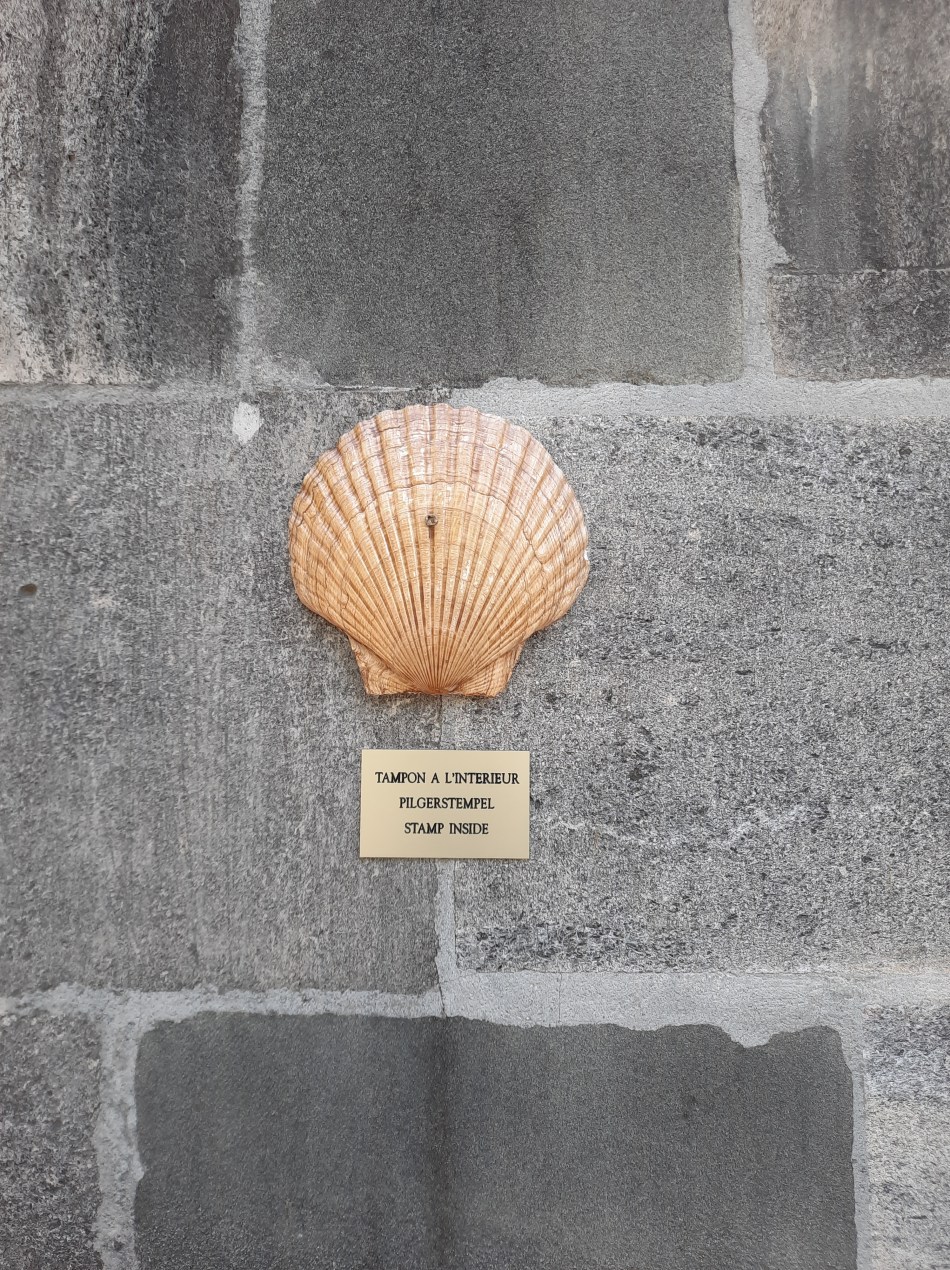
Seeing this seashell on the wall of Saint Petronilla of Pregny-Chambésy church during one of my walks, I asked myself: What does this shell mean? The caption beneath it offered no help, and there was no other information around. I saved the picture and forgot about it—until I spotted a similar sign on a street near Gare Cornavin. Something clicked in my mind, and with the help of Google Lens, I discovered what this shell and these signs represent.

Welcome to one of the routes of El Camino! Every year, on July 25, people from all over the world journey to the Cathedral of Santiago de Compostela in Northwest Spain to celebrate the feast of St. James (Santiago). This nearly one-thousand-year-old tradition attracts pilgrims and adventurers, traveling alone or in groups, from across the globe. They walk or cycle countless kilometers to undertake this spiritual journey.
The seashell is symbolic: just as the grooves on a shell converge at one point, the many routes of El Camino all lead to the same destination—the cathedral in Spain.
In 1987, the Cultural Route of the Council of Europe recognized these routes, and later, in 1993, they were inscribed on the UNESCO World Heritage List. This recognition highlights their significance and potential to foster social and cultural phenomena.
Switzerland’s and Geneva’s Camino paths are relatively new compared to others. However, they still attract many pilgrims due to the breathtaking natural beauty and incredible scenery.
You can read more about the history and details of El Camino here.
So, you’ll know its meaning next time you see a seashell on a wall or the ground—whether in Geneva, Pregny, or Carouge. Good luck spotting some!

 The Graduate Press - La Gazette de la Paix
THANK YOU for this explanation! I also often see the shell symbols. There is one in Tannay and frequently we see groups of walkers travelling through the Terre Sainte villages of Coppet and Founex. I wonder how these villages link to the Camino?
LikeLike