
By Vedika Pillai, News Editor of The Graduate Press
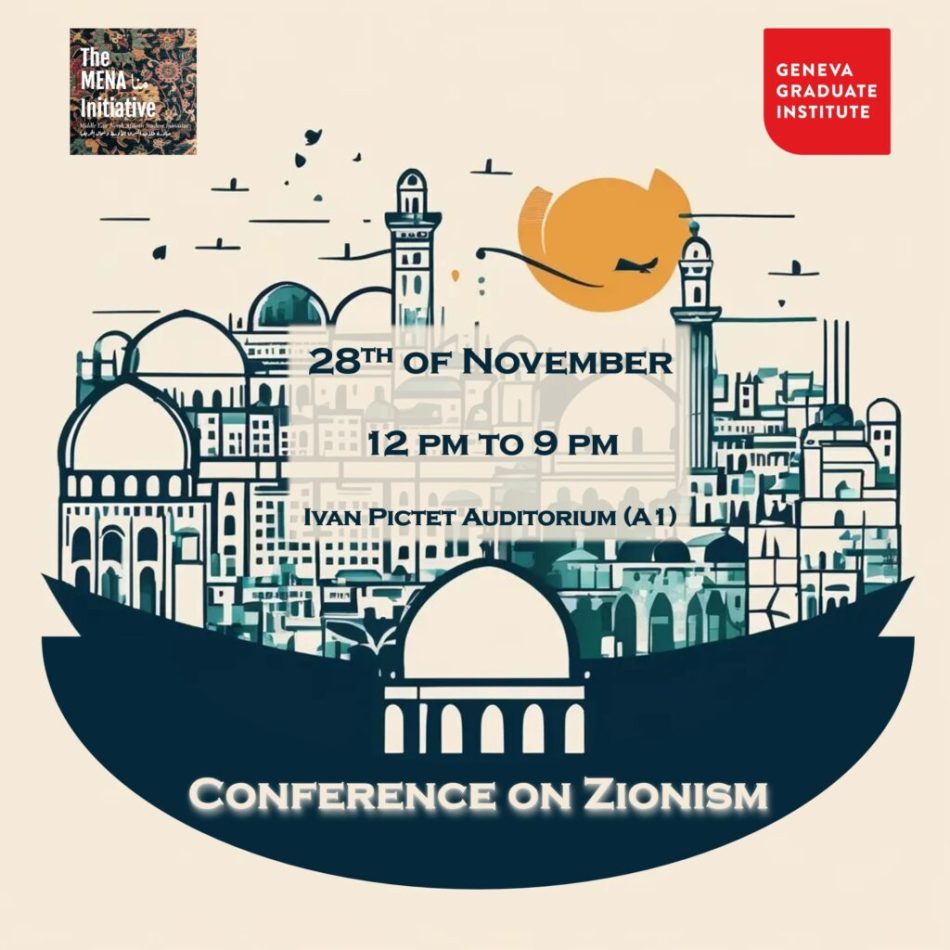
In recent weeks, discussions about the Middle East have intensified—conversations that are both necessary and, at times, unsettling. In many circles, these conversations often centre around questions like, Do I call this a war or genocide? Is this critique crossing into anti-Semitism? or even, Am I informed enough to have a complete opinion? These questions reveal how much we still grapple with understanding the region’s history, especially in such polarising times. They’re reflective questions, ones we need to handle with seriousness and curiosity, and they’re crucial for keeping the conversation open and constructive. So when I saw the poster for the MENA Initiative’s conference on Zionism, I was intrigued.
Visiting their website, I read more about the “Conference On Zionism1: History, Ideology, and Its Manifestations.” The framing was different—there wasn’t a single universal opinion, unlike much of the leading commentary we’ve been seeing recently. The event was also open to everyone in Geneva, an invitation to dive deeper into this complex topic. Scheduled for 28th November, from 12:00 to 21:00, this event brings together prominent scholars and advocates to critically examine the history, power structures, and future of Zionism, focusing on its profound and perhaps irreversible impact on the Palestinian people. I reached out to the organisers behind the conference from the MENA Initiative to learn more. Here’s what they shared.
What inspired the MENA Initiative to focus on Zionism, and why discuss this now?
As the MENA Initiative organisers explained, Zionism is a topic that often slips under the radar, even in academic settings. Seen as both complex and politically charged, it’s a subject that’s frequently avoided altogether. They shared why they felt this conference was especially urgent:
“Zionism is one facet of Israeli apartheid that is rarely discussed. Its history, dating back to the late 1800s, is complex, often seen as too sensitive to tackle, or simply overshadowed by the more visible manifestations of Israeli power and policies. The motivation behind this conference stems from a commitment to discussing Zionism as an institutionalised practice, a complex with the potential to be a fascist ideology. Understanding the root causes of the conflict in Gaza without addressing Zionism is impossible, and it must become a crucial part of our vocabulary and education.”
Reflecting on this, I realised how essential it is for spaces like ours to tackle complex and often uncomfortable topics, while expanding and evolving our vocabularies. Academia sometimes gravitates toward familiar ideas, maintaining a close—and at times unchallenged—relationship with historical narratives. For many students, this conference represents a rare opportunity to critically engage with a subject often presented through weighted or selective perspectives. A new member of the organising committee echoed this sentiment:
“Now, more than ever, it’s crucial for students of international relations to understand the ideologies shaping our world and the dangers they pose. In today’s political climate, this responsibility is even greater. Only through knowledge can justice be pursued.”
How does this conference align with or contribute to the academic culture at the Graduate Institute?
The Institute, known for its focus on international studies, has become a welcoming space for challenging conversations, attracting students, professors, and external guests who engage thoughtfully with complex global issues. The MENA Initiative expressed appreciation for the administration’s support for this conference, acknowledging the timeliness and academic importance of addressing Zionism.
“Our student body is also the only one in Switzerland to endorse a Boycott Divestment and Sanctions (BDS)-compliance policy through GISA, showing a commitment to addressing difficult issues like Zionism and its ties to the Palestinian cause. For us, academic freedom is not just a privilege but a responsibility to explore and critique pressing issues. We hope this conference adds meaningfully to the Institute’s mission, enriching our understanding of often-overlooked nuances in the discussion.”
Over the past year, the MENA Initiative, together with the Decolonial Action Network, has actively advocated for more inclusive academic spaces for discussions on Palestine, transparency in collaborations with Israeli entities, and additional support for students affected by the crisis. Since October, they also urged the Institute to take a formal stance on Gaza, given the urgency of the situation.
When asked if their advocacy has had an impact, MENA Initiative noted that the Institute has begun fostering more in-class discussions, especially within the Human Rights and Migration tracks. Still, they see room for an even more active role, in line with the Institute’s mission to promote critical dialogue and thought.
Why bring together such diverse speakers?
The MENA Initiative highlighted the importance of bringing together experts from across the Middle East and North Africa region, as well as renowned scholars with deep ties to the subject, to ensure a comprehensive exploration of Zionism. They emphasised that these perspectives, particularly from universities like SOAS and Exeter, are critical for unpacking the complexities of Zionism and dismantling dominant, simplified narratives:
“Our speakers bring unique, lived experiences, offering critical insights into the complexities of Zionism’s impact on the Palestinian cause. By including these diverse voices, we aim to dismantle the oversimplifications often associated with anti-Semitism accusations, which can silence meaningful dialogue. This isn’t an apolitical issue—it’s inherently political, rooted in a complex history.”
For those less familiar with Zionism, the event is structured to guide attendees through its nuances, with each panel building on the last. MENA particularly recommends the third panel, The Future of Zionism, for its synthesis of insights from the previous discussions. Featuring Dr Ilan Pappé, Dr Nur Masalha, and (TBC) Dr Francesca Albanese, this panel provides an essential overview. However, as it won’t be live-streamed and seating is limited, early registration is advised.
What does MENA hope attendees will take away?
MENA Initiative hopes that attendees will leave with a nuanced understanding of Zionism—its historical roots, its modern manifestations, and its pervasive influence beyond Israel, particularly in Western societies. As they put it:
“Our goal is to deepen knowledge of Zionism’s history, equipping attendees to counter pro-Zionist narratives with nuance, centering the conversation on ending apartheid and advocating for Palestinian liberation. We want this event to contribute meaningfully to broader discourse on global justice.”
They hope attendees will gain a stronger grasp of Zionism’s reach and be prepared to engage in discussions with arguments grounded in substance and nuance—while keeping the focus on the importance of Palestinian liberation and justice.
Did any books or readings shape this event—and could help us understand more?
The MENA Initiative has curated a reading list on their website, featuring essential works on Palestine and Zionism to inspire deeper engagement. One particularly influential book is The Colonizing-Self: Or Home and Homelessness in Israel/Palestine by Hagar Kotef, who is also a panellist at the conference. Kotef’s work critically examines how Israeli identity has been shaped in tandem with the displacement of Palestinians. MENA organisers, who draw significant inspiration from the book, explain:
“Kotef describes how Israeli identity is deeply linked to the stories of settlement passed through generations, entwined with the erasure of Palestinian presence. She argues that the Israeli sense of ‘home’ cannot be separated from a legacy of violence and dispossession, where the construction of belonging is inseparable from past violence. This self-reflection was among the most impactful we’ve read, and we highly recommend the book for anyone interested in understanding the complexities of Zionism.”
This foundational reading, along with others, has shaped the themes and perspectives presented at the conference, aiming to offer a multi-layered view on Zionism’s impact in both historical and contemporary contexts.
A Space for Critical Engagement and Reflection
As the MENA Initiative’s conference approaches, it’s clear that this event is more than just a series of panels; it’s an invitation to challenge, rethink, and deepen our understanding of a complex and often divisive topic. For those who attend, this conference offers the tools to engage thoughtfully with Zionism’s impact, not only in the context of Palestine but also in its global connections to power, politics, and ideology.
In a world increasingly divided, this conference is an example of how dialogue and critical inquiry can lead us toward greater understanding and collective action. For anyone who wants to be part of this — or is simply curious about understanding Zionism more deeply—MENA’s event is a timely and necessary opportunity.
- Zionism, or Jewish nationalism, is a modern political movement, which believes that all Jews constitute one nation (not simply a religious or ethnic community) and that the only solution to anti-Semitism is the concentration of as many Jews as possible in Palestine/Israel and the establishment of a Jewish state there (Beinin & Hajjar, 2017) ↩︎
 The Graduate Press - La Gazette de la Paix
0 comments on “Why Zionism, and Why Now? A Look into MENA’s Conference”