
By Motahareh Mohebi, News Editor of The Graduate Press
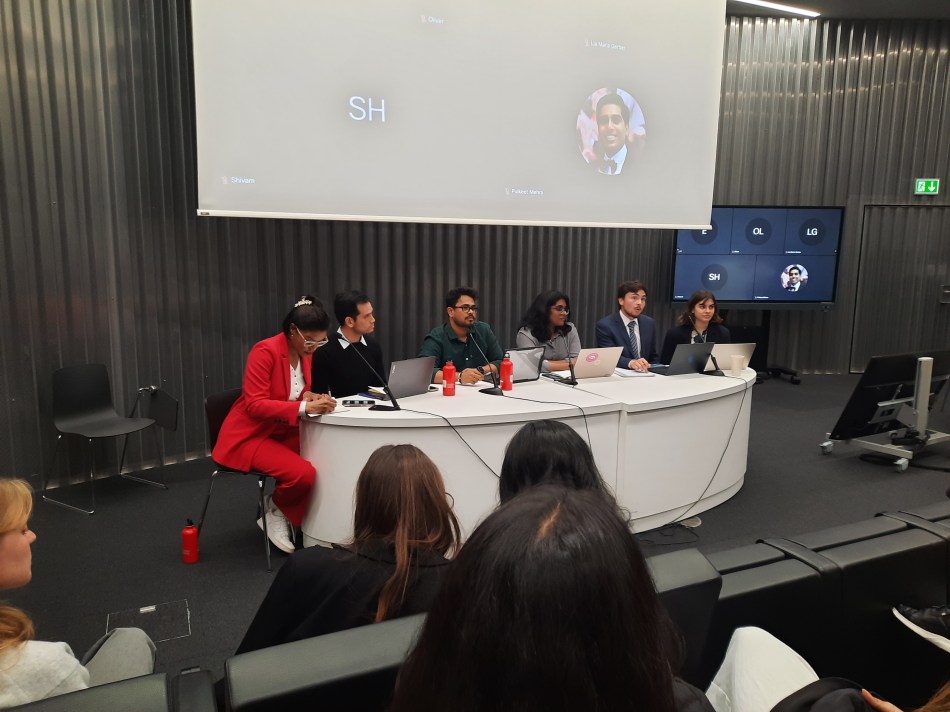
Starting at 18:15 and ending at 20:20, the second day of the GISA Election Debate was intense and engaging. Auditorium 2 was full, with barely an empty seat to be found.
The debate began with the candidates for the Environmental Committee: Leila Joutet & Shubhika Tagore (2nd Year MINT – Environment and Sustainability) / Kata Mims & Amanda Johansson (2nd Year MINT – Environment / 1st Year MINT – Environment). There were four pre-submitted questions, covering issues such as smoking and ashtrays in front of Petal 2, their experience and preparation, renewable energy installations, plant-based meals in the cafeteria, emission-reducing machines, and advocacy.
Leila and Shubhika emphasized their platforms, stressing visibility, engagement, and trust. They discussed their past experiences and collaboration with administration and the cafeteria, proposing solutions like using UNIGE’s plans and starting campaigns to collect cigarette butts to tackle smoking issues. They also mentioned the possibility of working with local organizations in Geneva and engaging students to identify problems. They aim to foster more meetings for Environmental Committee initiatives.
Amanda and Kata focused on incorporating recycling into daily life and applying this approach to other environmental issues. They emphasized autonomy and individual freedom, highlighting the importance of awareness, education, and support. They proposed flea markets for students to exchange goods and called for more resources for those wanting to quit smoking. They stressed that small steps are crucial, especially considering the diverse backgrounds of the Institute’s students, and emphasized the need to find common ground. They also said their plans aim to echo student voices and make initiatives accessible and inclusive.
During open-floor questions, students asked how candidates would engage everyone, manage group problem-solving as co-candidates, how their plans differed from other initiatives, and how they would handle their many responsibilities during the semester.
Amanda and Kata emphasized their slogan of making everything actionable and accessible. They proposed person-to-person chats over beverages to share knowledge and gather ideas. In managing group conflicts, they shared their experience in resolving issues through communication and dialogue. They also highlighted their desire to expand their impact beyond the Graduate Institute, collaborating with different initiatives and organizations.
Leila and Shubhika mentioned issues with second-hand items in June-July when most students are moving out, and suggested having a storage space and affordable food for students. They also emphasized their commitment to fostering communication with other organizations and initiatives to encourage attendance at events. They plan to leverage social media, including websites and LinkedIn, to engage students, and they underscored the importance of trust.
Next came the Welfare Committee debate. Although there were no pre-submitted questions, the audience was eager and many hands went up. There were 8 candidates in total, including 4 co-candidates: Vania Petlane (1st Year MINT – Human Rights & Humanitarianism) / Jorge Raúl Robles Bardales (2nd year MADIS – International Law) / Johan Wilhelm Studsgård (1st Year MINT – Global Health) / Sandra Thachirickal Prathap & Sanket Somnath Bhokre (2nd Year MINT – Conflict Peace and Security) – Co-candidates / Marco Gabriell Muñoz & Rana Nur Aydin (1st Year MINT – Conflict Peace and Security / Human Rights & Humanitarianism) – Co-candidates.
Questions covered how they would manage time and money, health services for students, and the long-awaited but inaccessible prayer room. Some asked how first-year candidates could ensure they’ll handle the challenges of the committee, while second-year candidates were asked about their commitment. Co-candidates were questioned about why they chose to run as pairs, while individual candidates explained why they preferred to run alone. There were also questions about how candidates would handle the promises made in their platforms while managing GISA’s responsibilities.
Vania emphasized the human dimension, suggesting the use of volunteers and last year’s budget. She spoke about her venting sessions and highlighted the importance of guiding students to health services. She mentioned her certification in first-line response to emergency situations, such as in cases of people with chronic diseases, which is recognized by the UK certification board. Confident in her support system—including her husband, present in the audience—she expressed that she could relate to students and assured them she would do well. She also discussed the prayer room issue, noting that she had spoken to Muslim students. While she initially considered co-candidacy, she decided against it because she didn’t know anyone well enough.
Jorge highlighted his slogan of keeping goals grounded and realistic, acknowledging budget constraints. He mentioned the possibility of fundraising, as they did last year, and said he would gather ideas from students. He expressed confidence in his past experience, both as a lawyer and co-founder of an association supporting indigenous people. He also mentioned offering psychological support for students. Jorge explained that last year, he didn’t run to gain more knowledge about how initiatives work and stated that with a lighter course load this semester, he could dedicate time to the committee. He emphasized that the values candidates offer are the most important, calling his candidacy a “holistic package.”
Sandra and Sanket emphasized prioritizing goals to address funding challenges. They planned to continue many current initiatives without adding unnecessary expenses. They noted that they had only one course this semester, allowing them full availability for committee work. They also proposed in-house medical teams at the institute and in student residences and said they were eager to discuss this with the administration. They emphasized the importance of understanding complex rules and regulations and explained that co-presidency would help them handle responsibilities effectively. They also spoke about the sense of community and friendship they wanted to foster within the student body.
Marco and Rana highlighted the importance of collaboration with other initiatives and using the remaining budget from last year. They pointed to their experience in managing tight budgets and stated their intent to use existing resources at the Institute. They also talked about having psychologists to help students and defended the importance of advocacy. They told students they would focus on keeping stress levels low and making sure they enjoyed their time. Their experience with sexual harassment cases and protests made them confident in their ability to lead. They have known each other for a long time and believed their teamwork would be successful. They also addressed the prayer room issue and discussed workshops on dealing with anxiety and suicidal thoughts.
At the end, the vice-president clarified some issues: advocacy is not a mandate for the Welfare Committee, volunteers cannot be expected to do all tasks while the president(s) is paid, there is no possibility for an in-house health team, and internal committee roles are not elected.
Voting is scheduled to start on October 7 at 10:00 a.m. and will close on October 10 at 10:30 a.m. We encourage all students to participate and cast their votes!
 The Graduate Press - La Gazette de la Paix
0 comments on “GISA 2024 Autumn Elections Debates – Day 2”