
By Pallavi Baraya, Co-Editor-in-Chief of The Graduate Press
The Graduate Press had the opportunity and privilege to attend the screening of the documentary 1489 as part of the 22nd edition of the FIFDH. Shoghakat Vardanyan, who served as the author, director, and producer of 1489, documents her family’s search for her brother, Soghomon, who was conscripted into the Armenian army following the outbreak of the 2020 Nagorno-Karabakh war and went missing on its seventh day. Awarded Best Film in International Competition at the IDFA, the documentary details the real human costs of conflict, and the trauma, grief, and loss behind the numbers and news headlines.
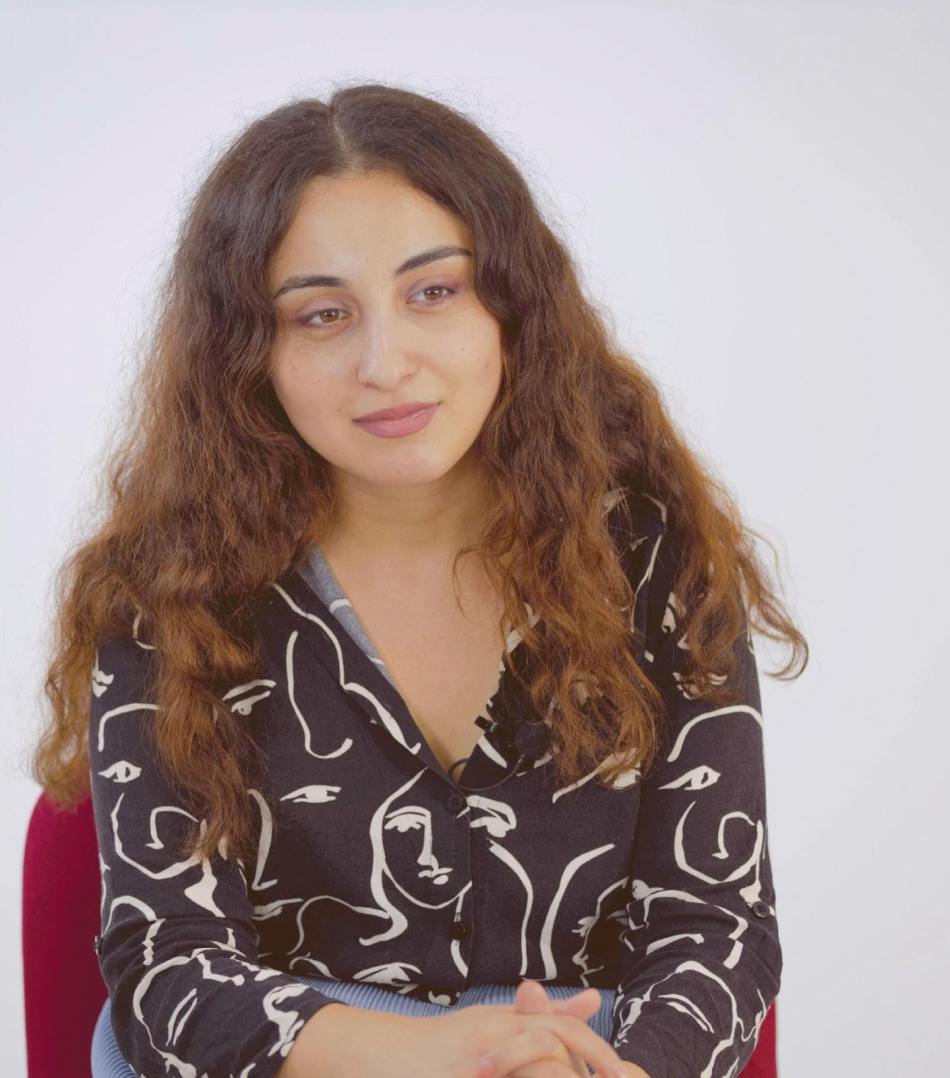
The screening was followed by a panel discussion, entitled, “Nagorno-Karabakh: a long-forgotten destiny”. One of the panelists, Sevinj Samadzade, was kind enough to speak with the Graduate Press about her experiences as a peacebuilder focusing on the context of the Nagorno-Karabakh conflict.
1. Can you tell us about your personal experiences growing up in a region affected by the Nagorno-Karabakh conflict, and how it has shaped your perspective on peace-building?
I grew up in a border region, a region bordering Armenia and Georgia, on the western part of Azerbaijan. The region went through war in the 1990s, when the first Karabakh war was happening. It wasn’t as dramatic as the war that happened in Karabakh itself, but because it was a border region tensions were felt there.
I would say growing up in that town had two sides, a positive one and a negative one. I grew up in the 1990s in a post-war situation, but my life there shaped my understanding of how wars function. A lot of children who grow up in conflict-affected regions have a detailed understanding of weapons, for instance — you could often see ammunition off the roads in the 1990s. Children who grew up right on the border villages could even tell from the sound of the weapon which kind it was, that is the level of education by default, the knowing without the choice of not knowing. Generally, a lot of women and girls who grow up in conflict regions carry the burden of militarization — there are a lot of soldiers walking around, for instance. You slowly see how militarization becomes very institutionalised, very routinized — they already push these gendered norms in schools. For instance, they pressurise boys to become soldiers professionally and encourage girls to reproduce to make soldiers. But, there’s another part of the story of growing up in the border region, that is a positive one. Since it was a mixed community, Armenians used to live in the town and they had a lot of interactions with us. I grew up with a very positive image of Armenians and of coexistence and so on.
2. You have been a part of the Confidence-building with the South-Caucasus program in 2013, an example of Track II Diplomacy dealing with the resolution of the ongoing Nagorno Karabakh conflict. Could you talk about your experiences, particularly the successes or failures of Track II diplomacy?
I’ve been involved since 2013, it was a long program — it went until 2019 — so six years at least until the 2020 war. It began with Azerbaijani and Armenian youth, but also Georgian youth, and it began in Georgia, coordinated by a Georgian organization. I was coordinating the part for Azerbaijan, selecting the participants to come to the programme and then designing the programme, and then doing the follow-up projects afterward with the participants. Usually, these topics varied from peacebuilding to gender to human rights and so on.
The larger purpose of the programme was to indirectly build confidence by bringing people to the same space because Azerbaijanis and Armenians don’t see each other- borders are closed, and they are only exposed to certain propaganda that States design for them. Bringing the youth together has a positive impact on changing the perspective of the so-called ‘other side’. Stereotypes are usually built from the negative conception of history, and they don’t know much about Armenians for instance. So, this programme was helpful in that sense, because we could see how people changed their attitude towards one another, how they built trust with each other, and how they took on some joint projects.
I was also involved with other peacebuilding projects. But these programmes didn’t always manage to create a massive peace movement or a massive peace consciousness, around being anti-war or preparing yourself for oncoming wars or at least politicizing peace to the extent that you would demand the Government signs a peace agreement. It was working at a very interpersonal level, some people were going through a transformation, they were building empathy, they were building a certain solidarity, and so on, but it wasn’t political enough or strong enough to actually build peace if we’re talking about peacebuilding.
So, some of the Track 2 initiatives involved leaders of some communities like internally displaced persons (the project I mentioned probably could be classified as Track 2.5 or Track 3). Some involved academics and scholars. Track 1.5 involved Governmental and non-governmental representatives. I don’t want to undermine all of these projects, some of them had a strong impact on the people, but they never built a massive consciousness. In most of these projects, there were three reasons for their failure.
First, they failed because over time they became more institutionalised. Once this institutionalisation happened at the level of these NGOs and civil society organisations, they became experts in the field. This is not a bad thing but once they became experts, their knowledge production and generalisation of knowledge stayed within small circles and bubbles — this institutionalisation also lost track with the general population. So, let’s say we have peacebuilding meetings and events in depth, but then they never really reached the public and there was no critical public discussion. And the reason for that was also because the Governments securitize people who participate in peacebuilding projects, they call them traitors because they feel they are doing something beyond the control of the Government. So, they said peace should only be only dealt with by the State, and if you are in civil society trying to deal with peace, you are just a traitor, especially for Azerbaijan because they lost the first Karabakh war. For Azerbaijan until the 2020 war, because they lost the first war, they just wanted to get the territories back. So, if you talked about peace, it meant that you wanted to give up those territories. Now after the 2020 war, we see the same narrative in Armenia- demanding peace means giving up on Karabakh.
Second, most of these narratives and discourses were shaped in the centres. I’m talking about Brussels, I’m talking about New York, I’m talking about London, where these giant peacebuilding organisations, the national or transnational ones, they were usually organising the events, so they were setting the agenda. Most of the time, the local peacebuilders were just part of the processes rather than the initiators of the processes. A lot of the time, most of the projects, most of the proposals, and even the knowledge production, were coming down from the big centres. And because most of the centres were in the West, they were usually avoiding the role of Russia, and this proved detrimental.
Third, especially with small projects like ours, we didn’t really re-evaluate our tactics or rethink what needs to be done. This was precisely because we believed in liberal peacebuilding at some point, we believed that if there was democratisation there would be peace. Both countries at the time were quite authoritarian. Armenia went through a revolution in 2018 and Azerbaijan still has a very authoritarian regime. So, we believed at that time that if the countries went through democratisation there would be a peace agreement. But this proved to be wrong, not only in Karabakh but globally also we see the decline of liberal peace and democracy. For instance, after the revolution happened in Armenia, Pashinyan started resolving conflicts in his own way. In the beginning, he was quite willing for peace but then he said “Artsakh is Armenia”, period, which triggered Azerbaijan to start the war in 2020 because he said it with that confidence. For a long time, it was a disputed territory and when Armenia said it was Armenian territory, it changed the dynamics. Of course, it doesn’t justify what Azerbaijan did in 2020, I’m just trying to explain the dynamics. But that’s where liberal peace failed. I think our engagement in civil society has changed a lot now, so after the 2020 war, some of us saw our failures. Others still carry on with their projects along similar lines but I personally didn’t, and some of my colleagues and friends didn’t.
3. You have discussed previously how excelling has helped you defy gender norms. Can you discuss the challenges you faced as a woman involved in peacebuilding in a conflict zone?
Most peace processes at the State level have always been androcentric, very male-centric. Most of the Government representatives are also men, it’s a man’s agenda basically. One might argue, that the men started the war and conflict because national liberation movements involved mostly men, not women. I’m talking about the movement at the end of the Soviet regime when the conflict emerged. In general, the root of the conflict is very masculine and its continuity is also a very hyper-masculine process. For instance, the Azerbaijani, when they lost the war in the 1990s, after the war what they were feeling as a nation was betrayal, was dishonor. This humiliation they felt, was quite a masculine humiliation, like their masculinity had been threatened by losing this war. Therefore in 2020, when Azerbaijan won, it was kind of like bringing back this masculine pride and honor. You can imagine how, contextually, the understanding of the conflict has shaped the national message around the conflict.
My own experience as a woman involved in peacebuilding is that if you are involved in peacebuilding in Azerbaijan, if you are independent, if you are critical of the Government, they start to securitize you, they start to target you. And of course, they use your gender when they target you, to delegitimize you. For instance, they used my gender identity to attack me on social media, they used words that would target my gender or they insulted me sexually and threatened me with physical assault. So, you see this is organised against not just women who are peacebuilders but also politically active women in Azerbaijan. They always target them by sexualizing them or their bodies.
Women have been involved with peacebuilding between Azerbaijan and Armenia since the 1990s and these women have been some of the strongest, some of the most outspoken women who demanded peace until the very last moment. But unfortunately, a lot of initiatives that have been exclusively female, Azerbaijani women or Armenian women, failed as well when the war started because they began supporting the war as well. We realized this essentialist understanding of gender, where women are pro-peace and men are pro-war, is wrong because women to a great extent supported the war, even the women who were a part of the peacebuilding process. In this confusion, we took a step back and re-evaluated this understanding that the women of Azerbaijan and Armenia would support peace, both at the mass and expert level. They were giving open statements about supporting the 2020 war. I would say that women’s experiences with war differ, and once they are in positions of power it doesn’t necessarily change the context. So, I don’t believe in the theory or understanding that if women were part of peace processes things would change, I don’t think the gender of a person matters when the structure doesn’t change. So, if the antagonisms during negotiation were to continue, representation would not necessarily represent the population’s needs or even women’s needs. This, just bringing women to the table discourse — I think this is a failure as well.
4. How do you envision the role of youth in promoting peace and reconciliation in conflict-affected regions, particularly considering your experience as a young leader and change-maker?
This discourse of young leaders and change-makers has been so prevalent in our region to motivate people, give them power, and hype them up. First of all, I think this is one of the things that needs to be deconstructed, this very shallow idea of being a change-maker because you are active, you are present. We need to question deep down whether we really are changing anything and if we are, what are we changing and how.
So, I think we should use another discourse, and youth today, some of them, are using it to completely reverse the table and existing discourses. If we keep within the same discourse or similar tactics or strategies that have been given to us, by default, we wouldn’t really be able to change anything. Youth involvement in peacebuilding, I think it should go beyond disciplines and institutionalised frameworks because, as I already mentioned, the failure of peacebuilding in the past 30 years comes precisely from there. All these first-generation peacebuilders when they started, were just young people with a compassion to stop the war, to exchange prisoners, to organize some humanitarian aid. But we learn from history and we learn from processes that had positive and negative outcomes, so young people now should think of different strategies, strategies that are radical and clearer with their ideology and have tactics that go beyond already existing frameworks.
Otherwise, I feel like we will be in the same loop. I think peacebuilding events, just involving the youth, take away the actual agency of the youth. I think talking about peace to pacify people, rather than to make them active subjects, really prevents us from achieving any form of a peace movement and from demanding peace. I think there should be some kind of transnational coordination of people from the conflict in sight — Azerbaijani and Armenian youth understand how war has affected them and their families and so on. For that reason, I think their solidarity and them organizing themselves beyond the existing structures and intuitions with their individual autonomy, alongside their autonomy as a collective, would completely change the dynamics.
But theoretically speaking this is easy, practically this is challenging because there are difficulties, like mobility — they cannot travel to each other’s countries, and they cannot see each other. So, the only way to do this is through online platforms now, which people are doing. And this reversing the discourse matter is happening online We can see how when Governments, nationalists, and these far-right groups bring this ultra-nationalist discourse and they fuel this fire of hatred and enmity, the only way to respond is by creating a completely different discourse to change the direction of hatred. I think the role of social media is something people should consider. I’m not necessarily opposing any structural way of organizing yourself, but I am saying that you should be aware of the mechanisms of dependency and all the structures we are pushed into without even realizing it.
5. Could you elaborate on the community development projects you’ve been involved with that focus on conflict transformation and peace-building? How do you measure the impact of these projects?
I come from a position of frustration with the war of 2020, and the post-war situation where there is the threat of another war and conflict is not de-escalating, it is still on fire, and the prospective for peace or a peace agreement seems very far — from my point of frustration I would say that there has been no impact, or it is not visible. And I wouldn’t say it’s only my position, there are a lot of people who have been involved in the same processes and they feel the same frustration. This frustration also goes in hand with other forms of political engagement that we are losing. So, we not only see a general apathy by the societies in Armenia and Azerbaijan after the war, because they feel like they have no power to change the situation, but also, we see the political landscape being more and more centralized by States.
Once the narrative is centralized by the State, neither civil society nor the general public has a say in this, they just wait for the moment when the Government will decide on peace or war. This is very sad, think about, for instance, all the projects that focused on community development or projects that aimed to engage young people in peacebuilding and so on. They are basically becoming delusional processes where they have no power to actually affect State centralized processes. Of course, it’s a little different in Armenia, there was a revolution, civil society got involved in the processes and civil society started to become a part of states, so there is a different picture. In Azerbaijan, civil society is completely destroyed, and the Government is cracking down on them as much as they can.
In these two different regime types, we have similar state-centric processes going on. That’s why there is no way to even think of the impact, other than again creating small circles of people- academics, activists, scholars for example. Generally speaking, you will find so many EU-funded projects that have been implemented in the regions, they have published nice reports but I think the truth is we see the picture now — if we can’t prevent another war, what’s the point of all these processes?
6. Looking ahead, what are your aspirations and goals in the field of conflict resolution, management, and peace-building, and how do you plan to achieve them?
My personal goal and aspiration is we carry on what we are doing now with the Feminist Peace Collective. It’s a very small Collective where we are trying to build solidarity, transnational solidarity in the South Caucasus. There is also the control of information when it comes to the conflict, you see, we don’t necessarily get information from the other side, and even in your own country you don’t get to know what’s happening, there’s huge propaganda. That’s one of the things we do — keep each other informed, we keep each other sober. We also try to develop some strategies that will help us think beyond already existing frameworks that most of us have been involved in.
So, my personal aspiration is very much collective. I’m trying to be as visible as possible on social media and so on but I’m not in the region anymore. I’m more of an academic than an activist on the ground. This means my positionality and my perspective are actually from the outside now, but as much as it’s from the outside, it’s also connected to activists in the region. For instance, my position now is to bridge the gap between theory and practice, because I come from practice but now, I’m dealing with theory, so I can see the gaps that are there.
I think part of this frustration of activists, and people who are coming from practice is also because of this gap or relationship with theory. So, in the midst of searching for answers and tactics of what to do and how to do it, I see my role there as someone having the privilege to connect the missing points and open discussion about how we can close these and how we can incorporate theory into practice and vice versa.
When it comes to conflict resolution, right now you can hear the Azerbaijani and Armenian Governments say, every once in a while, they are very close to signing a peace agreement. We have been hearing it for the last three years, but we know they are closer to another war than a peace agreement. In this kind of reality, we know that demanding our Governments sign a peace agreement is not enough — we are also conceptualizing if they have a peace agreement, what will be included in the agreement, what kind of issues will they address, and what kind of paper will it be.
I also believe that peace is not just a State agreement, even if they come to their forced State agreement, it doesn’t necessarily mean peace for the population because they would probably sign an agreement that would suit their interests and those of their allies, like Russia and Turkey and the West along with all the other players. Peace should be about the Azerbaijani and Armenian people, not about political allies and their patrons. So, I position myself there to deconstruct peace, to re-politicize peace, and to make sure that we have an alternative imagination or utopia for our region.
 The Graduate Press - La Gazette de la Paix
0 comments on “Lessons from Peacebuilding: Interview with Sevinj Samazade”