
By Samuel Pennifold, MINT 2nd Year
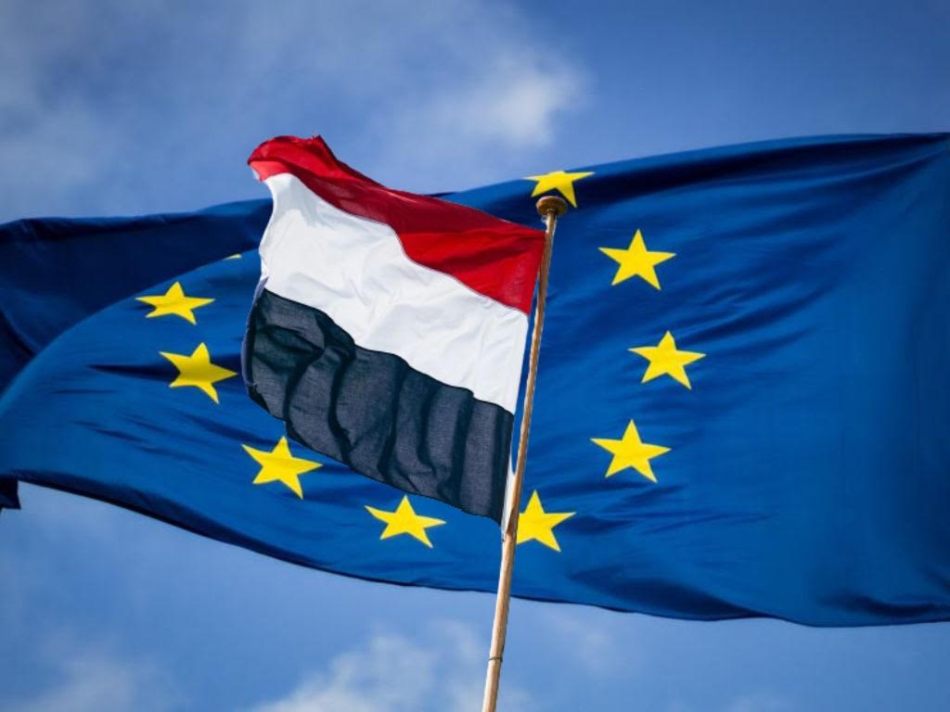
The Netherlands, Europe’s lowest-lying country, has become the latest western European state to be swallowed up by the rising tide of far-right populism in a time marked by a global economic downturn and multiplying divisions.
A few weeks ago, the people of the Netherlands took to the polls and elected the 150 members of its House of Representatives. The Party for Freedom, led by the islamophobic, eurosceptic radical Geert Wilders, won 37 seats. In the process, they more than doubled their share of the vote in 2021, from 10.8% to 23.6%. Frans Timmermans’ Labour-Green alliance claimed second place with 25 seats, and Peter Omtzigt’s upstart New Social Contract party won 20 seats. The result leaves the Party for Freedom as the largest party in the House of Representatives, though 39 seats short of the 76 required to rule with a majority.
Following the initial shock and awe, and in some cases, horror, towards the result, the gruelling process of coalition building to decide which parties will control the House is underway across the political spectrum. After the last election it took 9 months to confirm a coalition. With no end in sight, last week, in an effort to quell the fears of potential coalition partners and many of the people of the Netherlands, around Europe, Wilders promised that if he becomes Prime Minister, his policies will respect the Dutch constitution. A reassuring prospect from the “Dutch Donald Trump”.
Within the broader European context, this could set up large right and far-right party gains in the 2024 European Parliament elections, especially as the number of seats next year is set to increase from 705 to 720. Though the road to a large right and far-right bloc within the European Parliament is not an easy one. The existing ideological and practical splits between the right and far-right parties of Europe could well serve as a blockade to collaboration. Meloni’s party, Fratelli d’Italia, and the bookmaker’s favourite to be France’s next President Marine Le Pen’s party, Rassemblement National, sit in separate ideological camps in the EU Parliament: the European Conservatives and Reformists (ECR) and the Identity and Democracy Group (ID), respectively. Both are unlikely to want to be the junior player in any pan-European conservative coalition. Nonetheless, the current surge for the right and far right in polls in some of the larger member states, including Poland as well the aforementioned Netherlands, France, Italy, and even in Germany, across the EU could deliver a right and far-right power base in the European Parliament that may not be unseated for years.
This could lead the European continent down a dangerous path towards further blatant human rights violations against refugees, discrimination against minority groups across the continent, a collapse of the European Court of Human Rights, and an end to any sense of European style liberalism.
Though it is not just the right and far-right that should be giving you cause for concern for the years ahead. The Danish Prime Minister, Mette Frederiksen, the latest left-wing starlet from the EU’s northern reaches, has also continued to double down on her policy of no asylum seekers by returning them to their country of origin in an effort to outflank the right and far-right parties in her country.
Seemingly, from every angle, Europe is growing more insular as the fear of the “other” in the populi grows ever greater.
Britain, the EU’s black sheep, a title only contested by Victor Orbán’s Hungary, is seemingly somewhat further down the path of right and far-right neurosis that is gripping Europe. As I look towards my own country, I am filled with a sense of dread, a feeling that only grows as the protection of the EU and Europe from such madness slowly slips away.
“How did you go bankrupt?” Bill asked. “Two ways,” Mike said. “Gradually and then suddenly.”
Could the same fate await the EU and Europe?
 The Graduate Press - La Gazette de la Paix
0 comments on “The Dutch, Europe, and the Right”