

By Grusha Victor, Professional Development Committee
The Graduate Press (TGP) and Professional Development Committee (PDC) have teamed up to publish fortnightly articles highlighting the professional and academic journeys of IHEID alumni working in different fields, sectors as well as different continents. Interviewed alumni will also share their experiences while studying at the Institute, including the activities and/or initiatives they participated in. We hope that, through these interviews, current students will get a better idea of the scope of work and possibilities that are open to them after completing their degree, whether it is an interdisciplinary Masters or a PhD.
BIO:
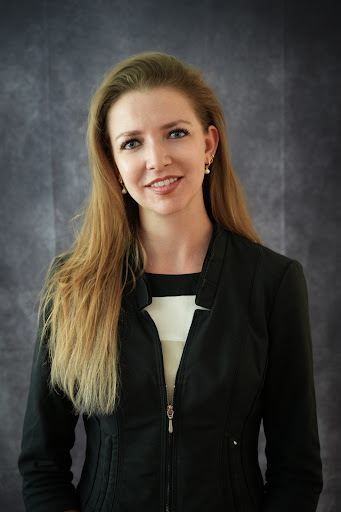
Caroline Armstrong Hall is a Legal Officer at the United Nations Investigative Team to Promote Accountability for Da’esh/ISIS (UNITAD). She has previously worked in various fields of international law for the European Patent Organization, the Hague Conference on Private International Law and the United Nations Secretariat, as well as local NGOs in Nepal and Lebanon. She is admitted to the bar in the state of New York and has an interdisciplinary master’s from the Fletcher School of Law & Diplomacy (Tufts University) and an LLM in International Law from Cambridge University, where she also served on the editorial board of the Cambridge International Law Journal.
Interview Questions:
- Could you walk me through your career path, starting with your exchange student experience at IHEID and any internships or jobs you had before your role as Legal Officer at UNITAD?
While I always knew I wanted to specialize in international law, within the field I’m an incurable generalist. Not only is it beneficial from a strategic perspective to get to grips with different areas of law early in your career, it’s also intellectually rewarding because of the many overlaps and interlinkages. This is something I tried to capitalise on after graduating from law school in 2015. When I came to IHEID as an exchange student nearly four years later, I had already worked as a Legal Assistant and Consultant at the Permanent Bureau of the Hague Conference on Private International Law and had interned at the Office of the Legal Counsel in the UN Secretariat’s Office of Legal Affairs. International family law and the law behind the “stuff that makes the headlines” were two very different beasts but I learned so much from both. That said, despite the value I saw in breadth of experience I soon realized that many jobs I was interested in were with international organizations, and that therefore it would be useful to thoroughly learn the nuts and bolts of international organizations law. I did this as a lawyer in the Young Professionals Program of the European Patent Organization, before joining the United Nations Investigative Team to Promote Accountability for Da’esh (UNITAD) in 2023.
- The impactful efforts of UNITAD serve as a compelling source of inspiration for students passionate about international law. Could you kindly walk us through a typical day in your role as a legal officer, shedding light on the fascinating work you do?
UNITAD is the only UN investigative mechanism for international crimes operating at the invitation of its host country, Iraq, and as such has a very special mandate. Most of my work deals with the operations of the Office of Evidence Management (OEM), which carries out some very important functions in light of the Investigative Team’s in-country activities. For example, together with national counterparts, UNITAD exhumes mass graves and collects and analyses battlefield evidence left behind by Da’esh from its brutal occupation of large parts of Iraq. As with other investigative mechanisms, OEM also works on digital forensics and all the evidence that is collected requires thorough analysis and careful management. While no one day looks like another, my job is to provide support for these essential activities to occur as smoothly as possile, so that evidence is ready for use in criminal proceedings to bring Da’esh memers to account for war crimes, crimes against humanity and genocide.
- What do you think are some of the core skills that are required to do this work? How did your time at IHEID help you cultivate the skills needed for your current role?
Many of the people I work with are specliazed experts in highly technical fields, whether forensic anthropology, digital forensics, information and evidence management, or criminal investigations. Not only do they have different professional backgrounds but they also come from a diverse range of countries and cultures, and each brings with them their own life experiences. This is not limited to my direct colleagues, whether international or Iraqi, but also includes our national counterparts, some of whom we work very closely with. In such an environment, clear communication, trust and confidence are key. I am very lucky to have studied at IHEID, even if just for a semester, where the classroom is an opportunity to prepare for the kinds of exchanges I regularly have with others from different backgrounds, or who approach issues from a very different angle. The core skill–and it really is a skill–for dealing with this is listening. Not to hear or to respond, but to understand. Really listening can make the difference between overcoming this as a challenge, versus harnessing the benefits of this diversity for optimal impact.
- Having worked in various countries, each with its own unique legal norms and laws, how have you effectively adapted and acquired the necessary knowledge for each role you’ve undertaken?
The answer to this is simple: get to know the locals as well as possible, wherever you are working. Within the parameters of what is feasible and appropriate, immerse yourself in their culture and norms, and cultivate meaningful and authentic relationships. Only then can you fully understand the system in which you’re operating and can you give your work the best chance of success. Even small exchanges and interactions will offer valuable insights and better understanding. This is why I have always been a strong proponent of direct engagement with affected communities, if possible at the grassroots level. Despite being a lawyer, which usually means desk-based work, I deliberately tried to pursue these kinds of opportunities on the ground. This brought me to southern Lebanon in 2016 and rural Nepal in 2018, where I worked with local NGOs for a few months on youth empowerment and girls affected by menstrual banishment, respectively. In the case of Nepal, this contributed to concerted UN advocacy among 51 NGOs. Interacting on a personal level with affected individuals will bring your work into sharper focus and help you to carry out your functions and serve your stakeholders better. One aspect of UNITAD’s work that means very much to me is the return of remains ceremonies we help to facilitate following mass graves excavations and the identification of human remains. This helps give bereaved families long-overdue closure and certianty regarding the fate of their loved ones, and is a powerful reminder of why the work that we do matters.
- For students keen on pursuing a path in International Humanitarian Law (IHL) and International Criminal Law (ICL), what avenues exist for gaining early exposure to this field while pursuing their master’s degrees? What educational groundwork and professional competencies should they prioritize for a successful journey?
Students at IHEID are already well-placed to make these preparations. It’s important to make use of opportunities for practical application of the law as early on as possible, of which IHEID (and Geneva) offers many. Moot courts are an excellent example, including the Jean Pictet Competition. But there are other ways of acquiring hands-on experience. I was very lucky to work as a research assistant during my master’s at the Fletcher School of Law and Diplomacy, Tufts University (from which I did my IHEID exchange) on complaints before UN Human Rights treaty bodies and other litigation, which helped me concretize much of the theory I was learning in class through real-life application. Geneva also offers an excellent environment for getting to know people with career choices and profiles you admire. Time spent engaging with such people, learning from them and building relationships is hardly ever wasted. Finally, if you can find the time, feed your intellectual curiosity beyond the classroom. Read as much as you can (especially while you have access to all the databases) and try to write something for yourself or get involved on the editorial team of journals or publications. This was something I did with the Cambridge International Law Journal during my LLM, which taught me a great deal about very topical issues in different sub-fields of international law, including IHL and ICL.
- Considering all the people you’ve met in your field and all the experiences you have had so far, what personal attributes are essential for success?
I suppose this depends on the kind of work you’re interested in doing, but in my case I would name three. Firstly, the ability to truly understand others. These may be partners, stakeholders or even spoilers, but they are all people with their own history, culture, motives and outlook. The more clearly you can see things from their perspective, the more justice you can do to your mandate in your dealings with them. This is the bedrock of diplomacy and, if done well, can multiply benefits for different stakeholders. Secondly, a vision and sound strategy, informed by a meaningful sense of purpose. And finally, kindness and a good sense of humour. Working in this field can be challenging and draining, so appreciating the lighter side of things is important not only for yourself but also for the people around you and their well-being.
- We observed that you pursued dual Master’s degrees. Did you find this academic pursuit particularly challenging, and what motivated your decision to pursue the same?
I found it challenging in the best possible way and was fortunate to get the best of both worlds. I learned pragmatic and clear-eyed strategies for tackling global challenges at the Fletcher School (and IHEID during my exchange) and enjoyed the intellectual depth of the law faculty’s doctrinal approach at Cambridge University. My motivation for each of the two master degrees was inspired by the institutions’ different philosophies and approaches to learning. Something they had in common, however, was offering opportunities for engagement with others from different backgrounds. At Fletcher this was because of the varied and extensive work experience many of my peers had in related fields, including development, diplomacy and even business. At Cambridge it was because of the collegiate system where you often find yourself sitting next to someone from a completely different discipline in the dining hall, unexpectedly learning more than you can imagine about artificial intelligence, virology or algae in the process. Both master’s degrees encouraged embrace of and engagement with the unknown, which is very valuable. After all, we don’t learn unless we step out of our comfort zones.
The views expressed herein are those of the author and do not necessarily reflect the views of the United Nations or any other organization.
 The Graduate Press - La Gazette de la Paix
0 comments on “IHEID Alumni Journeys 5 – Caroline Armstrong Hall-The career journey of an alum who was an exchange student at IHEID”