
By Muhammed Lamin Dibba, MINT 2nd Year
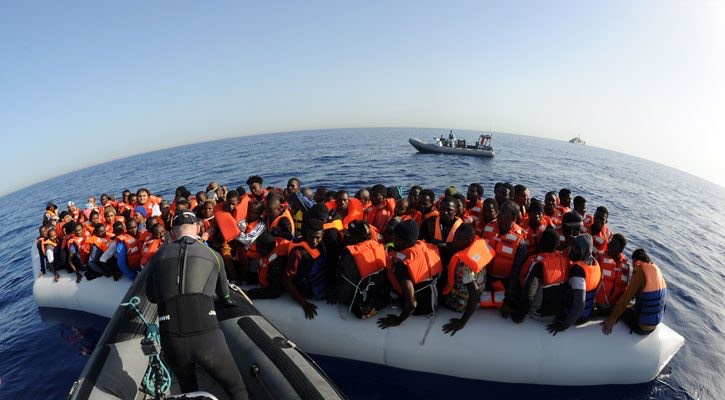
Since the beginning of 2023, more than a thousand young individuals from the Gambia, the smallest country in mainland Africa, have attempted to reach Europe via alternative routes, including the Sahara Desert, to improve their lives. The latest tragic incident resulting from the phenomenon of irregular migration took place on October 31, 2023. Twenty-one young people from the coastal town of Bakau perished as they attempted to escape poverty, construct a future for themselves and their families, and explore new horizons by traversing the perilous Mediterranean Sea to Europe.
In recent years, the small West African country has been among the 5 top immigrant countries in Europe. According to the 2022-2023 National Labor Force survey, 45.3% of the youth (those under the age of 35) were unemployed, accounting for 56.4% of the total population. Having grown up in the Gambia, I know that these are not just statistics but a lived experience for my friends and family, including myself. Observing the debates of the Gambia National Youth Parliament, many of the youth parliamentarians bemoaned the economic and social disparities in terms of possibilities among the youth, stemming from poor governance and how economic policies are formulated and implemented by the government. This resulted in youth unemployment and irregular migration from the Gambia to Europe in quest of opportunity, with many tragically losing their lives.
After being enslaved by a military dictatorship for twenty-two years, the Gambia gained democracy in December 2016 with the hope of addressing the numerous intractable issues, such as youth unemployment and inflation, which continued to be a push factor in irregular migration. Those on their way to Europe via the so-called “back way” decided to return home beginning in early 2017, and others who were stranded in transit countries such as Niger, Tunisia, Algeria, and Libya were repatriated through the International Organization for Migration’s Assisted Voluntary and Reintegration Programs. Most of these young people had high hopes for the future and anticipated that the change in government would provide them with new chances. Unfortunately, by the end of 2017, the majority of the youth had returned to the “backway” since their hope had been dashed and their dreams had not been realized. They would rather perish at sea trying to reach Europe for better opportunities than live in poverty and indignity in the Gambia.
According to Samuel Hall, around 11,929 Gambians landed in Italy by water in 2018, with 24% being unaccompanied minors. This not only represents a reversal in our governance structure but also the government’s incapacity to consolidate our democracy. The establishment and failure of the European Union Trust Fund to address the root causes of irregular migration, reintegration assistance to both forced and voluntary returnees, curb domestic crimes, and promote social stability is proof of inefficiency, corruption, and nepotism of the government. Opportunities for funds are always given to individual businesses close to the corridors of power, thereby neglecting the very people who should have access to these funds to start their ventures. In fact, there are more young individuals traveling through perilous journeys today than before the change of government in 2016.
Despite these limitations, the Gambian government and other stakeholders may consider the recommendations below to ensure safe alternatives to the irregular migration threat, allowing the youth to realize their full potential and contribute to economic development. First, the government should do a needs-based evaluation to help them discover and keep a niche. This will help to create economic opportunities by investing in infrastructure, education, and job creation programs across the board. Second, since high crime and violence rates are important motivators for irregular migration, promoting peace and security is critical. To establish a more stable environment and to make the Gambia more appealing to investors, the government should support the rule of law and good governance. This can improve economic prospects while decreasing the desire to migrate. Third, the government can collaborate with populations affected by irregular migration to solve the issues they encounter through area councils and municipalities. This assistance may include the provision of recreational facilities such as stadiums and parks, access to essential services such as education and healthcare, and financial support for economic development efforts.
Fourth, the government should collaborate with the destination continent, namely Europe, to limit irregular migration by establishing regular migratory paths for persons who wish to work in Europe. This would allow migrants to develop new skills, destination countries to fill labor gaps, and the Gambian economy to develop through remittances, which currently account for more than 33 to 50% of the country’s GDP. Working with destination countries to develop visa systems and other forms of lawful migration can help achieve this.
To summarize, irregular migration is a complicated and diverse issue with numerous negative consequences. There are, however, various remedies to irregular migration, such as developing economic opportunities in countries of origin, encouraging good governance and the rule of law, fostering peace and security, establishing regular migrant channels, and addressing the core reasons for irregular movement. The Gambia must continue to address the underlying causes of irregular migration and collaborate with partners such as civil society to build effective policies and programs. By doing so, the Gambian government can create a more prosperous and secure future for its citizens.
 The Graduate Press - La Gazette de la Paix
0 comments on “Irregular Migration: A Challenge to Governance in the Gambia”