
By Faith Nekoye Musumba, Geneva Oke, and Ramata Franklin
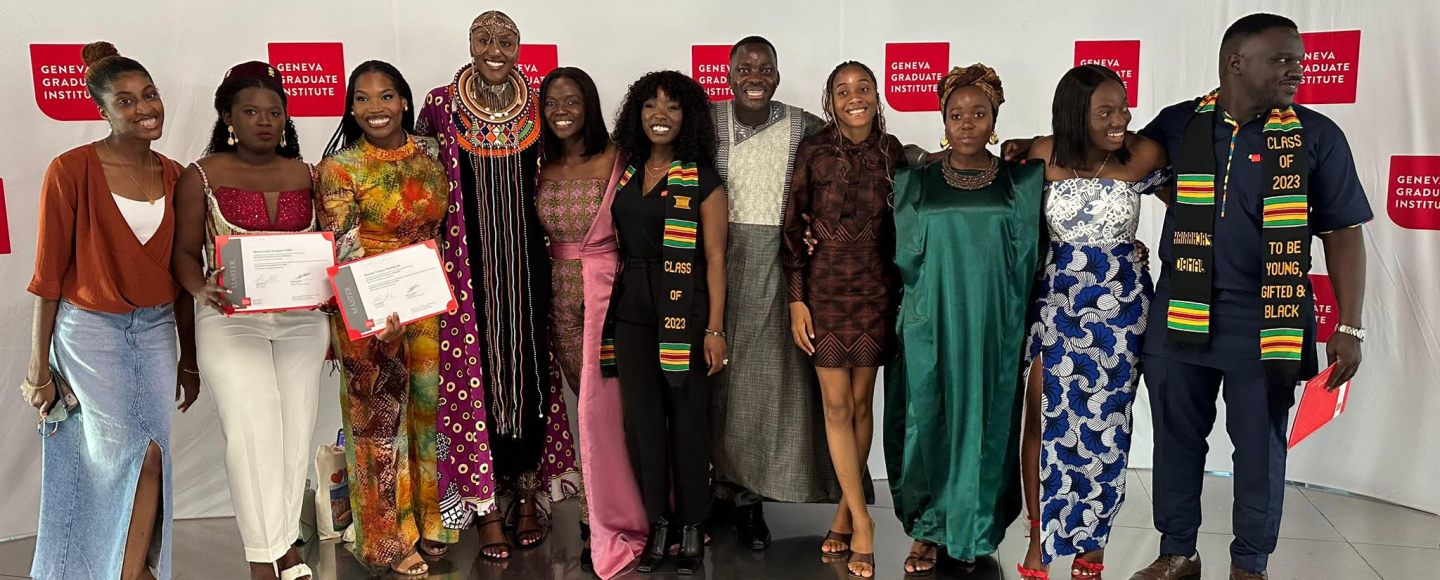
September 2023 was a memorable month for many in the IHEID community, marking their transition from student to alumni status. Among those making this transition were Afro-descendants, many of whom, along with their friends and families, gathered at the Picciotto Common Room in the evening of 14th September to celebrate this milestone. The event, known as “Black Graduation”, was the second of its kind organized by Black Conversations (BC) and the Afrique Students Association (ASA).
The concept of Black Graduation is not a new one. Indeed, Black Graduation is a popular pre-commencement ceremony held for Afro-descendant graduates in higher education institutions worldwide. The ceremony acknowledges the historical barriers that people of African descent have faced in academia, while honoring graduates for their hard work and accomplishments. It also provides the opportunity for graduates to recognize those who have supported them during their academic journeys, including faculty, staff, friends, and family. As such, Black Graduation reinforces the bonds of scholarship and fosters a sense of community.
With graduates elegantly attired, families brimming with pride, and champagne generously flowing, September’s Black Graduation ceremony could be described as a joyous one. Smiles and laughter permeated the event. However, tears also made an appearance as congratulations were extended and farewell messages were exchanged. Although the ceremony celebrated a significant achievement for the graduates, it also served as a reminder of the approaching end of a life phase, the beginning of a new one, and the uncertainty that comes with such a transition. Thus, the ceremony undoubtedly evoked mixed emotions.
Mixed emotions also define the journeys of many graduates of African descent during their time at IHEID. In this article, we reflect on these journeys, recognizing both the highs and the lows, with the aim of formulating a vision for the future of Afro-descendant students at the Institute.
Community as Resilience and Rebellion
In a 2022 lecture hosted by the Gender Centre in partnership with BC, Tufts University’s Dr Lorgia García-Peña shared her insights as a woman of colour in academia. In this lecture, entitled ‘Community as Rebellion’, she emphasised the need for students and faculty of colour to engage in liberatory practices of radical community building to combat the academic world’s tokenizing and exploitative structures. Among the key elements of this radical community building is creating spaces of freedom where subjugated knowledge and experiences are prioritised. We are proud to state that community building, and the creation of such spaces are among the biggest strengths of the class of 2023.
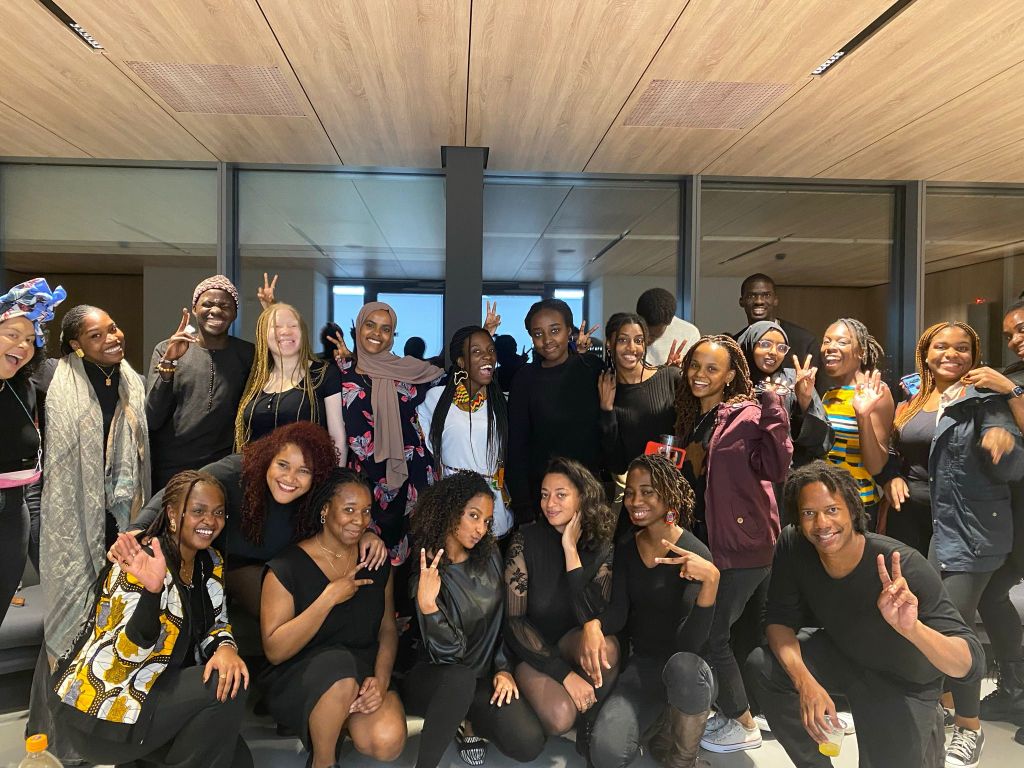
The work of student associations such as the Afrique Students Association (ASA) and BC are manifestations of community building by students of African descent in the Graduate Institute. The main function of BC specifically is to recognise and celebrate the diversity in blackness with historical sensitivity while fostering a sense of community. We intentionally honor and discuss our unique realities and give voice to our stories, which can be healing from the many discriminations and traumas we endure as racialized people. BC, in tandem with ASA, actively works to engage with stakeholders of the African diaspora, to highlight valuable insights and moving narratives.

Through its efforts to build community and create spaces of freedom, BC has gained recognition as a source of co-created knowledge and expertise among black students at IHEID. In Autumn 2022, BC had the privilege of participating in the first session of the Permanent Forum on People of African Descent, which aims to combat global systemic racism and the oppression of people of African descent. In this discussion, coordinated by the Office of the United Nations High Commissioner for Human Rights (UN OHCHR), BC spoke on and had the privilege of moderating a panel entitled ‘Education, People of African Descent, and the Fight Against Racism’. Through this discussion on access, representation, and activism, we were able to continuously humanize ourselves through powerful exchange and authentic collaboration.
The inaugural staging of the Geneva Summit on Africa is yet another feat of the class of 2023. With the strong support of the institute, Professor Degila, Professor Mohamadeou, and Director Marie-Laure Salles, representatives from the black student body organised the summit, which centered the knowledge and experiences of African youth and peoples of the diaspora. This annual student-led event brought together practitioners, experts, leaders of industry, and other individuals at the nexus of development and African affairs for dynamic discussions.
Through these events and platforms, we have had the privilege to not only create community amongst ourselves, but to also extend it across the globe. Overall, the experiences that we have had as a community of black students through BC and ASA have been enriching, fulfilling, and challenging.
Institutional Woes

It is, however, impossible to discuss studying at IHEID as black students without noting the inherent difficulties. As highlighted above, we have built community and we have created spaces to discuss the breadth and depth of our experiences, but these spaces are also a survival mechanism. Within the two years of pursuing a master’s degree and five years of pursuing a PhD, a black student will encounter interpersonal discrimination and institutional racism on numerous occasions.
In the Graduate Press series entitled “The Collective Experience of Black Students at IHEID”, the class of 2023 noted some of the challenges they faced while studying at the Graduate Institute. This set of four articles revealed how black students were aghast at the lack of diversity in the curriculum, the presence of only two full-time faculty members of African descent, the prevalence of microaggressions, and the tolerance of oppressive ideologies in the classroom. While the latter may also be an issue at many other institutions of higher learning, it is deeply disappointing when so much of the work in which students at IHEID seek to be involved directly affects the Global South and marginalized communities. One student noted, “There can be a lack of sensitivity when discussing Africa and African bodies when you are not from Africa” (Musumba, 2022). It is clear that, as an institution, IHEID strives to have a diverse population of students, but this diversity is hardly reflected beyond the admission level.
Perhaps this dearth of care stems from a degree of ignorance surrounding the realities of black students. And, unfortunately, this carries on to the alumni experience as well. While the Institute reports fantastic outcomes for its graduating students in the months that follow graduation, many black students belong to the non-EU/EFTA category of students for whom it is imperative to find employment to stay in Geneva. Not just any employment either, many of us require gainful employment if there is any realistic hope of continuing our professional lives within International Geneva. Yet, highly experienced students among our class have been encouraged to apply for unpaid positions within the UN system and many of the job postings made apparent to the student body are for people holding Swiss and EU citizenship. This advice shows a lack of understanding of the barriers faced by black students within the professional landscape.
Conclusion
We acknowledge the efforts made by the Institute to be committed to diversity and inclusion. However, the experiences of its black students, particularly in the class of 2023, shows that there is still a long way to go. To truly uphold this commitment, we recommend a holistic approach to diversity and inclusion. Diversity and inclusion should be evident in all aspects of academic life, including student admission, faculty recruitment, course materials, teaching practices, career advising, and welfare support. Progress in this direction is essential to decolonizing the curriculum.
We, as black students in the class of 2023, created our own spaces of freedom and resilience in our time, and those that follow us will surely do the same. We hope that the Institute will put its best foot forward as it continues to invite black scholars through the doors of Maison de la Paix. Until then, black students will continue to make light: through BC, through ASA, and through Black Graduation.
Photo Credits: Members of Black Conversations
 The Graduate Press - La Gazette de la Paix
0 comments on “Black Graduation and Reflections from the Class of 2023”