

By Cara Au, Emna Ines Fayala, and Rachel Lauder
Imagine being unable to use the toilets without asking for help because the heavy doors are not manageable to open in a wheelchair. Imagine struggling to find a table in the library because the first floor is inaccessible, with only stairs and no public elevator. Imagine being unable to move through a hallway on your own because the ramps are too steep. Imagine missing classes and falling behind because you cannot leave your room due to a medical condition and no recording is available. Imagine being unable to study at the university of your choice because that institute does not accommodate you.
These seemingly hypothetical scenarios are the daily reality of many students, staff, and visitors at Maison de la Paix, whether they are people with visible or invisible disabilities. Unfortunately, these experiences are often overlooked and dismissed. This article aims to bring to light the numerous physical barriers that directly impact many people at IHEID and what steps can be taken to adequately address these concerns.
What are some of the main issues?
Those who study at or visit IHEID may notice an abundance of stairs. Stairs lead to the library, up to the Fab, and in the auditoriums. The architects of Maison de la Paix overlooked the barriers this creates for individuals with mobility aids, such as wheelchairs, walkers, or ergonomic equipment, preventing them from moving between floors with ease. As a result, individuals with disabilities must take the one small elevator available per building to get anywhere that is not on the main floor. In addition, these elevators are constantly congested and slow. This is, of course, until said elevators are out of use for over a week – an issue not communicated to students ahead of time, which would allow them to figure out alternative ways to move between floors. Stairs in the auditoriums, particularly A1A and A1B, also limit where people can sit, which is often far from their peers in a back corner. Likewise, IHEID restricts itself to what experts it can invite to conferences due to the unnecessary stairs leading up to the podiums in these rooms. If Maison de la Paix was designed in a more accessibility-friendly manner, more appropriate ramps and elevators would have been included to ensure everyone could move freely.
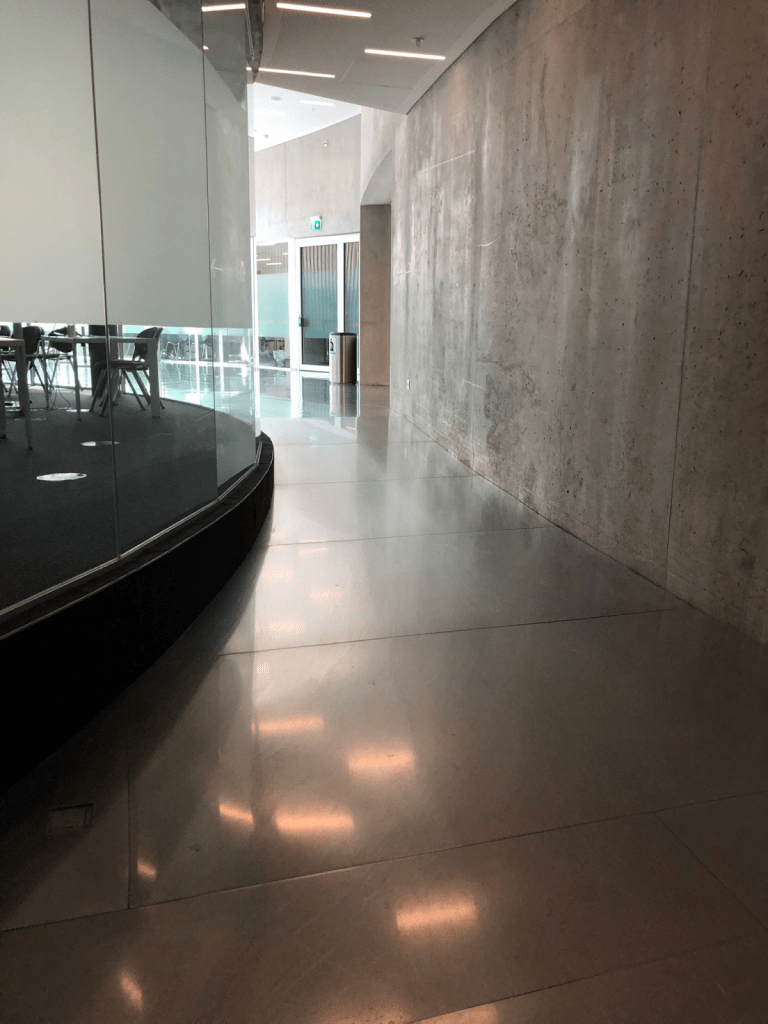
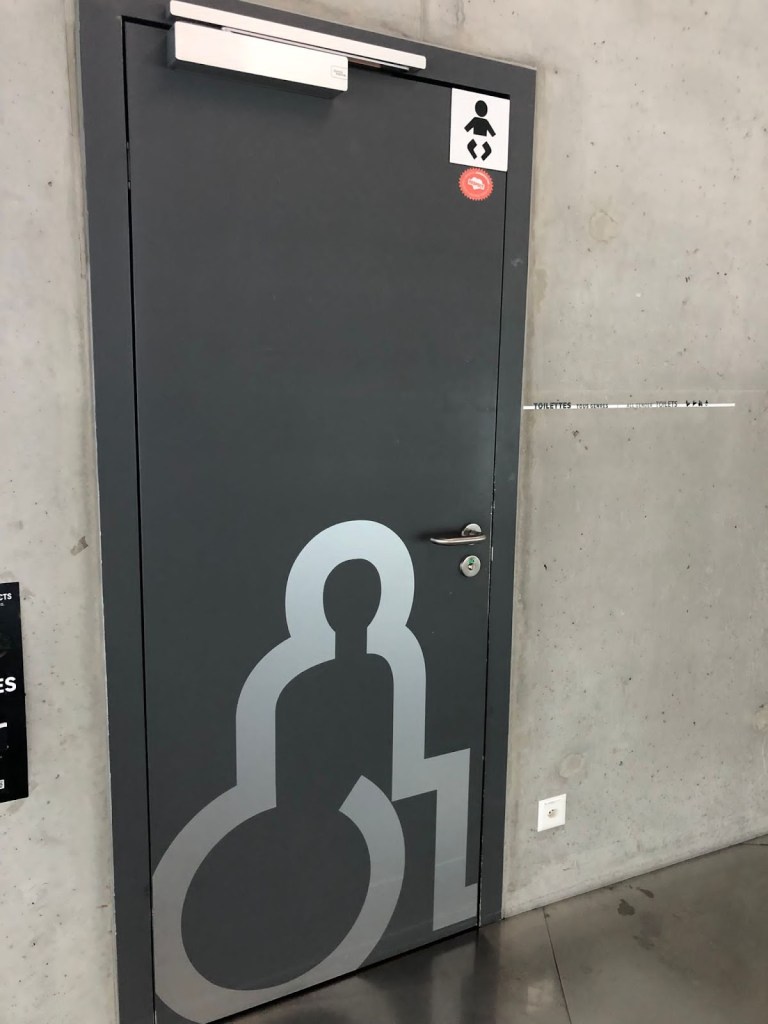
The hurdles do not stop at the stairs as people also come face-to-face with heavy doors between hallways. These doors are not accompanied with automatic buttons, preventing people with mobility limitations from opening them. In addition, the high placement of card sensors creates barriers for people in wheelchairs to enter during off-hours. Moreover, the few available accessible toilets lack automatic buttons to open their hefty doors. Consequently, students, staff, and visitors are presented with a difficult ultimatum: go the entire day without using the toilet or risk being trapped inside, if one even manages to enter in the first place. Alternatively, they may ask someone to assist them, but autonomy and dignity are human rights and one should not have to rely on the help of others for a basic and intimate everyday action.
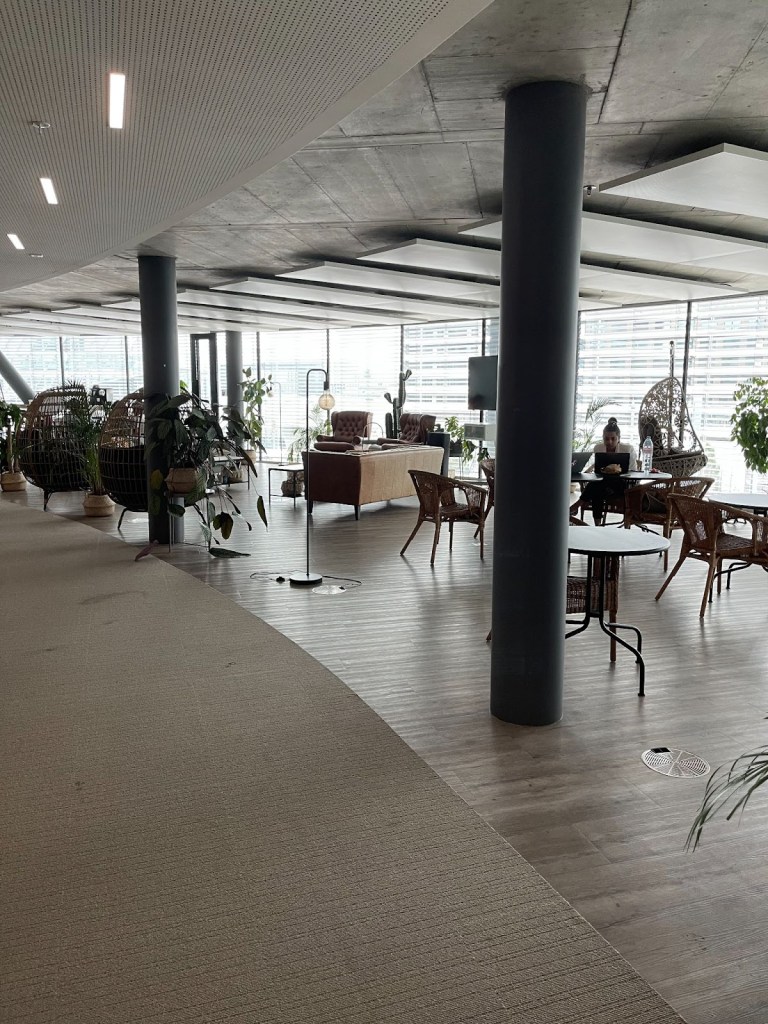
When one finally manages to reach their destination, such as their classroom, within Maison de la Paix, the layout of these spaces immediately raises red flags. Several of the classrooms at IHEID are arranged in a manner which is inhospitable to students with physical accessibility-related needs. For instance, round tables in classrooms like S8 and S12 are positioned in a way that leaves a large empty space in the middle while the chairs that surround it are cramped between the tables and the walls. Therefore, individuals with mobility aids may struggle to maneuver in the room, especially if seats next to the doors are taken. Similarly, although the Fab seeks to offer a calming environment, the layout does not offer sufficient space to accommodate physical aids without moving several chairs and tables.
What is currently being done?
IHEID is aware of these challenges. The Student Wellbeing & Support Team works directly with students with visible and invisible disabilities regarding individual accommodation requirements (contact them at wellbeing-support@graduateinstitute.ch). While this team advocates for student-specific accommodations, it is focused on a case-by-case approach rather than large-scale institutional changes. In 2022, a Disability Taskforce was established as part of the Gender, Diversity and Inclusion Initiative, to improve inclusion and accessibility at the Institute. This Taskforce, led by Dr. Laurent Neury with the support of staff and students, seeks to address existing barriers at IHEID to create a study and work environment adapted to everyone’s needs. In the coming months, a strategic report will be presented to IHEID leadership. While the Taskforce is driven by members who are passionate about addressing the urgency of this issue, it operates on a voluntary, participatory basis. In order for its recommendations to be implemented, it needs to be made a funding priority on the agenda of the IHEID Direction.
Calls to Action
Considering the current obstacles and limited resources of the Taskforce, it is necessary to draw attention to what everyone can do to improve inclusion and accessibility at IHEID.
To the IHEID administration we propose the following:
In the short term,
- Educate all personnel to have a welcoming and accommodating attitude with students with disabilities.
- Publish the findings of the upcoming disability taskforce report so they are available beyond internal staff to the IHEID student body.
- Develop a voluntary, anonymous program for students to take notes for others with learning disabilities.
In the long term,
- Improve physical spaces at the institute and residences to be more accessible in light of previously identified issues and the disability task force report..
- Approach accessibility in a proactive rather than reactive manner. In addition the already existing services to address individual student, faculty, and staff accommodation needs, create accessible spaces for everyone including visitors.
- Allocate significant and sustainable funding towards increasing accessibility at IHEID.
For the IHEID student body:
- Create space for people with mobility needs on campus. If you are able, use the stairs, so that it can free up elevators for those who really need it. In crowded classrooms, leave easily accessible seats close to doorways for students with mobility needs to occupy.
- Support students with learning disabilities. Understand that we all differ in our learning styles and abilities, and some learning disabilities may not be visible or diagnosed. Volunteer to take notes for other students with or without learning disabilities.
- Hold administration accountable. Encourage IHEID, GISA, and student wellness initiatives to make accessibility a priority and take action.
- Share your story. If you want to reach out to the Taskforce to discuss your experiences or get involved, contact emna.fayala@graduateinstitute.ch.
- Spread awareness. Speak up if you notice accessibility issues, even if they do not affect you directly. Have conversations with friends, professors, and administration on this topic. Educate yourself and others with useful resources, including through sharing this article! Other helpful resources and prominent advocates include:
- The Princess in the Tower Blog on chronic pain and invisible disabilities
- Trans and disabled activist Jess O’Thomson on Twitter
- Disability Together educational account on Instagram
- Chilean-French disability activist Elisa Rojas on Twitter
Although these calls to action will not eliminate every accessibility-related barrier at IHEID, they are important starting points.
Conclusion
The Maison de la Paix is a symbol of peace through its name. IHEID’s academic culture promotes diversity in membership and thought, yet it struggles to ensure total inclusivity. It is not possible to embody a message of diversity, tolerance and belonging without an accessible environment that respects the needs of all. Despite being only 10 years old, the architecture of Maison de la Paix, which concerns itself with aesthetics rather than practicality, is outdated and discriminatory. How can one of the most prestigious academic establishments in the world exclude others through its design? By not prioritizing accessibility needs of the community, it creates disillusion in its student body, because so much more is expected of such a prestigious establishment. Furthermore, IHEID, despite having so much else to offer, risks driving away students and researchers who could greatly contribute to the Institute, but whose accommodation needs are not met.
Disclaimer:
This article is written from the experiences, observations, and discussions of the authors and by no means claims to encompass all accessibility issues present at IHEID. The authors acknowledge accessibility concerns vary from individual to individual, all of which deserve to be taken seriously. The authors hope this article will spark further discussions among and between students, staff, administration, and visitors to ensure IHEID is updated in a manner that is welcoming and accommodating to all.




Whilst you are here!
The Graduate Press is currently raising funds for our 5th-anniversary print edition and we need your help. The last 5 years at the institute have seen some incredible highs and lows and TGP has been there for them all. Now TGP wants to immortalise that history.
If you can, we are currently accepting donations via our GoFundMe page.And if you would like to be involved with The Graduate Press and the 5th anniversary edition you can email us at gisa.thegraduate@graduateinstitute.ch or via Instagram.
 The Graduate Press - La Gazette de la Paix
0 comments on “Maison de l’Inaccessibilité”